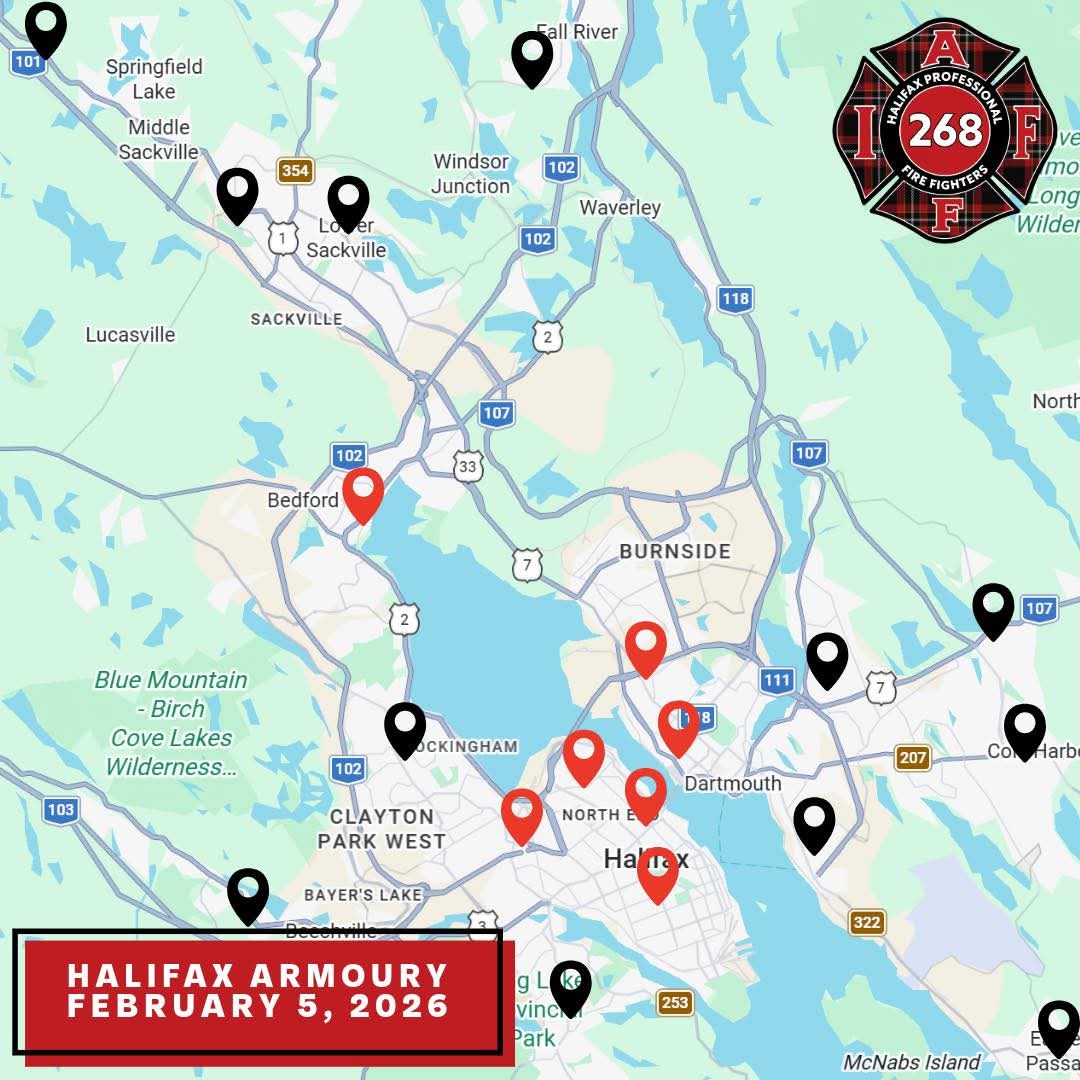
 The fire at the Halifax Armoury is a clear example of what it takes to safely and effectively manage a major structure fire in Halifax.
Today’s response required:
• 41 fire fighters
• 7 engines
• 2 aerials
– One staffed with 4 fire fighters
– One staffed with 3 fire fighters
(Both above current Halifax staffing levels, which are normally 2 per aerial — below industry and international standards)
• Support units and personnel
• 1 District Chief
• 1 Safety Officer
In addition, 3 units from DND Dockyard Fire (IAFF Local F65) — an engine, aerial, and rescue — responded with approximately 10 additional fire fighters.
Major responses like this stretch our system thin. With no backfilling during large-scale incidents, coverage elsewhere in the city is significantly impacted.
During this response, additional emergencies continued, including a smoke condition at a downtown hotel that required fire fighters from Dartmouth, Westphal, and Herring Cove to respond. Thankfully, that incident was minor — but emergencies don’t pause because resources are already committed.
Halifax’s current service levels are extremely thin. To address attrition, make up for previous staffing shortfalls, and begin catching up with the city’s rapid growth, the service must continue hiring 40 fire fighters per year — the maximum number that can be safely and effectively trained.
Next week, Council will debate the fire budget. Decisions made there have real, immediate consequences for public safety, fire fighter safety, and the city’s ability to respond when residents need help the most.
Major incidents don’t happen in isolation — and neither should decisions about staffing and resources.
The fire at the Halifax Armoury is a clear example of what it takes to safely and effectively manage a major structure fire in Halifax.
Today’s response required:
• 41 fire fighters
• 7 engines
• 2 aerials
– One staffed with 4 fire fighters
– One staffed with 3 fire fighters
(Both above current Halifax staffing levels, which are normally 2 per aerial — below industry and international standards)
• Support units and personnel
• 1 District Chief
• 1 Safety Officer
In addition, 3 units from DND Dockyard Fire (IAFF Local F65) — an engine, aerial, and rescue — responded with approximately 10 additional fire fighters.
Major responses like this stretch our system thin. With no backfilling during large-scale incidents, coverage elsewhere in the city is significantly impacted.
During this response, additional emergencies continued, including a smoke condition at a downtown hotel that required fire fighters from Dartmouth, Westphal, and Herring Cove to respond. Thankfully, that incident was minor — but emergencies don’t pause because resources are already committed.
Halifax’s current service levels are extremely thin. To address attrition, make up for previous staffing shortfalls, and begin catching up with the city’s rapid growth, the service must continue hiring 40 fire fighters per year — the maximum number that can be safely and effectively trained.
Next week, Council will debate the fire budget. Decisions made there have real, immediate consequences for public safety, fire fighter safety, and the city’s ability to respond when residents need help the most.
Major incidents don’t happen in isolation — and neither should decisions about staffing and resources.
News
The fire at the Halifax Armoury is a clear example of what it takes to safely and effectively manage a major structure fire in Halifax

**** Via Halifax Professional Firefighters
Why Staffing & Resources Matter
The fire at the Halifax Armoury is a clear example of what it takes to safely and effectively manage a major structure fire in Halifax.
Today’s response required:
• 41 fire fighters
• 7 engines
• 2 aerials
– One staffed with 4 fire fighters
– One staffed with 3 fire fighters
(Both above current Halifax staffing levels, which are normally 2 per aerial — below industry and international standards)
• Support units and personnel
• 1 District Chief
• 1 Safety Officer
In addition, 3 units from DND Dockyard Fire (IAFF Local F65) — an engine, aerial, and rescue — responded with approximately 10 additional fire fighters.
Major responses like this stretch our system thin. With no backfilling during large-scale incidents, coverage elsewhere in the city is significantly impacted.
During this response, additional emergencies continued, including a smoke condition at a downtown hotel that required fire fighters from Dartmouth, Westphal, and Herring Cove to respond. Thankfully, that incident was minor — but emergencies don’t pause because resources are already committed.
Halifax’s current service levels are extremely thin. To address attrition, make up for previous staffing shortfalls, and begin catching up with the city’s rapid growth, the service must continue hiring 40 fire fighters per year — the maximum number that can be safely and effectively trained.
Next week, Council will debate the fire budget. Decisions made there have real, immediate consequences for public safety, fire fighter safety, and the city’s ability to respond when residents need help the most.
Major incidents don’t happen in isolation — and neither should decisions about staffing and resources.
The fire at the Halifax Armoury is a clear example of what it takes to safely and effectively manage a major structure fire in Halifax.
Today’s response required:
• 41 fire fighters
• 7 engines
• 2 aerials
– One staffed with 4 fire fighters
– One staffed with 3 fire fighters
(Both above current Halifax staffing levels, which are normally 2 per aerial — below industry and international standards)
• Support units and personnel
• 1 District Chief
• 1 Safety Officer
In addition, 3 units from DND Dockyard Fire (IAFF Local F65) — an engine, aerial, and rescue — responded with approximately 10 additional fire fighters.
Major responses like this stretch our system thin. With no backfilling during large-scale incidents, coverage elsewhere in the city is significantly impacted.
During this response, additional emergencies continued, including a smoke condition at a downtown hotel that required fire fighters from Dartmouth, Westphal, and Herring Cove to respond. Thankfully, that incident was minor — but emergencies don’t pause because resources are already committed.
Halifax’s current service levels are extremely thin. To address attrition, make up for previous staffing shortfalls, and begin catching up with the city’s rapid growth, the service must continue hiring 40 fire fighters per year — the maximum number that can be safely and effectively trained.
Next week, Council will debate the fire budget. Decisions made there have real, immediate consequences for public safety, fire fighter safety, and the city’s ability to respond when residents need help the most.
Major incidents don’t happen in isolation — and neither should decisions about staffing and resources.