**** Via Hope for Wildlife
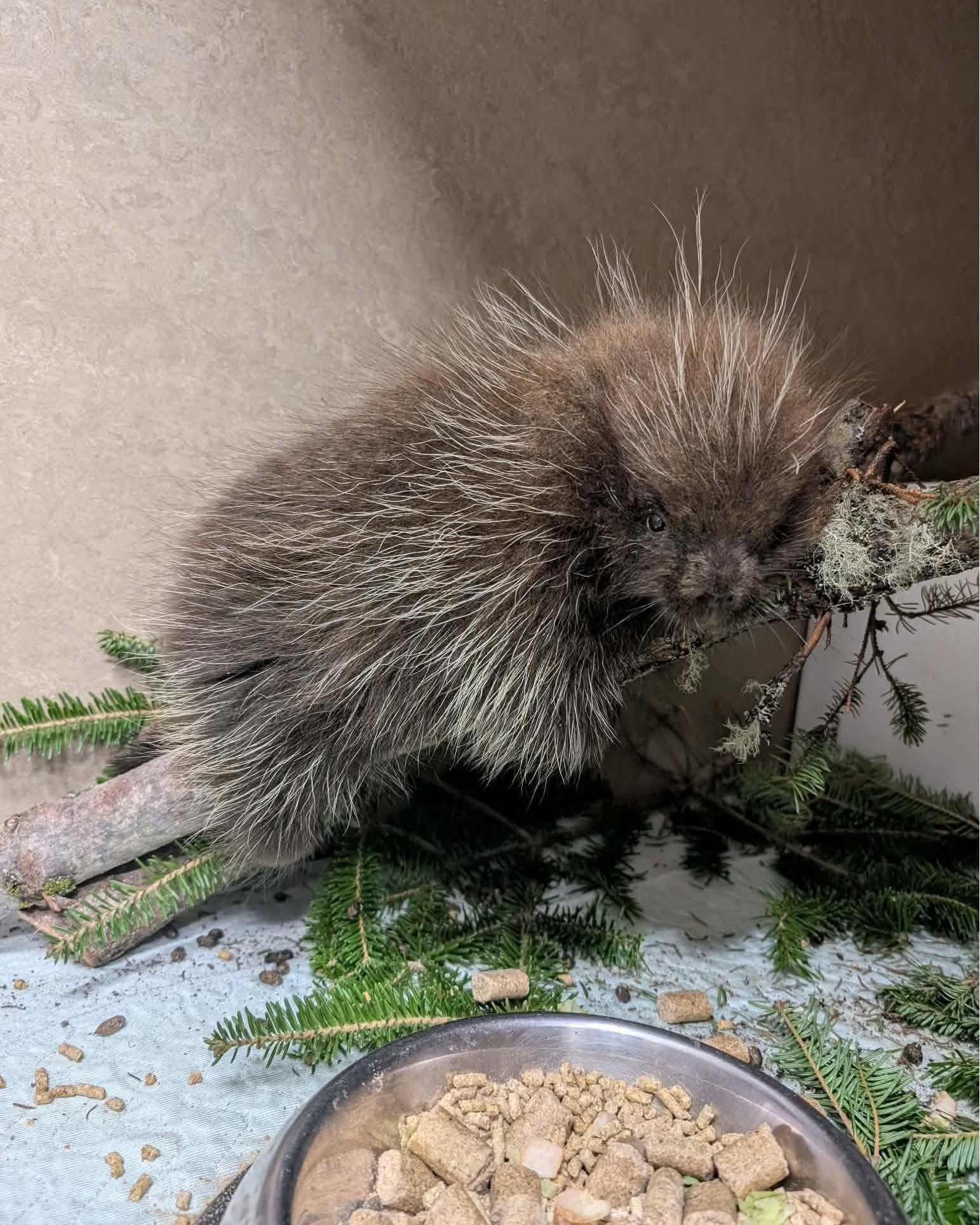
Just chillin'
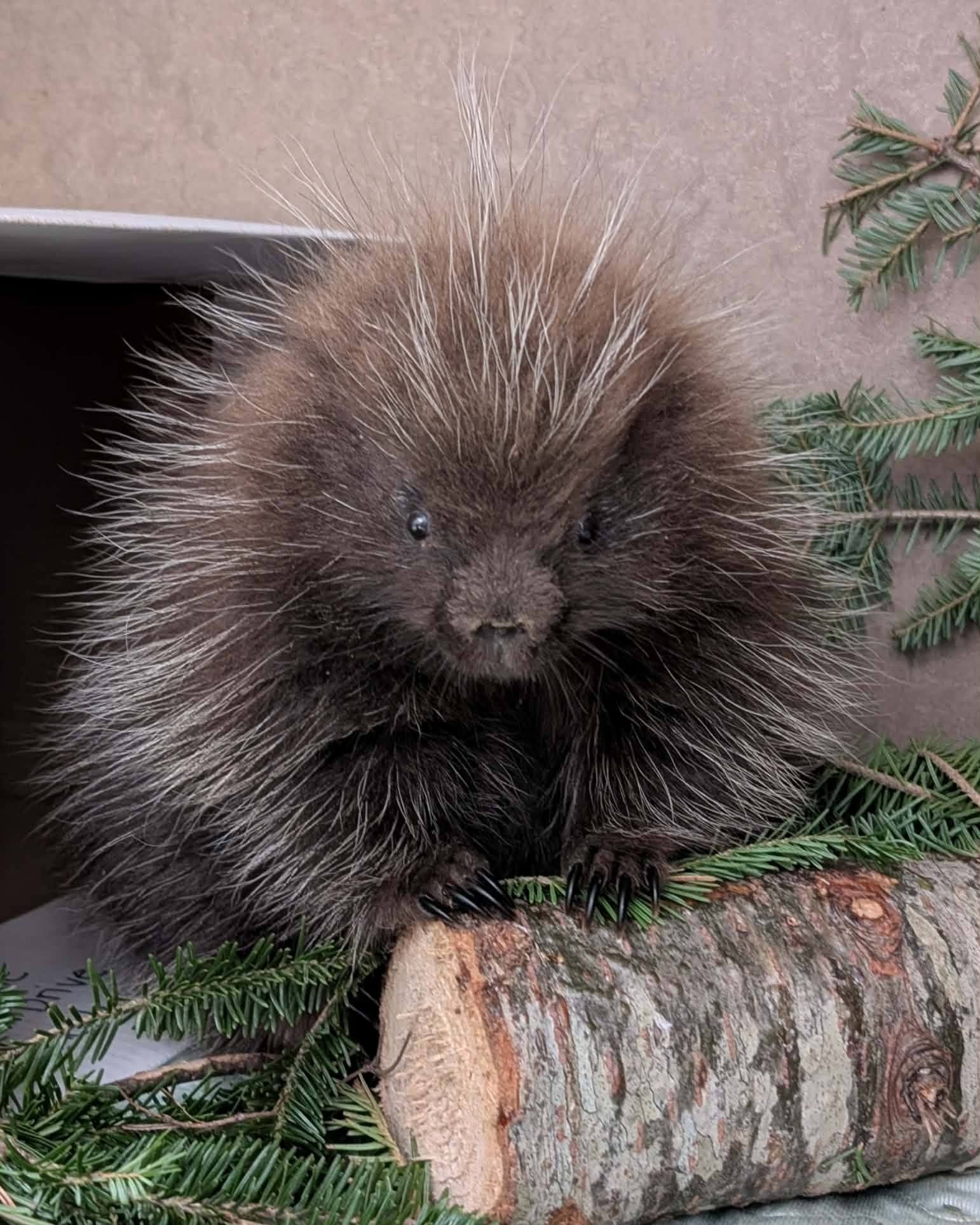
This late-season juvinile porcupine was admitted a couple of weeks ago, as he was missing quills and fur on his rump and tail. We suspect either mange or some other parasite, so while he's being treated he's simply hanging out in one of medical rooms waiting for his excellent insulation hair and defensive quills to grow back.
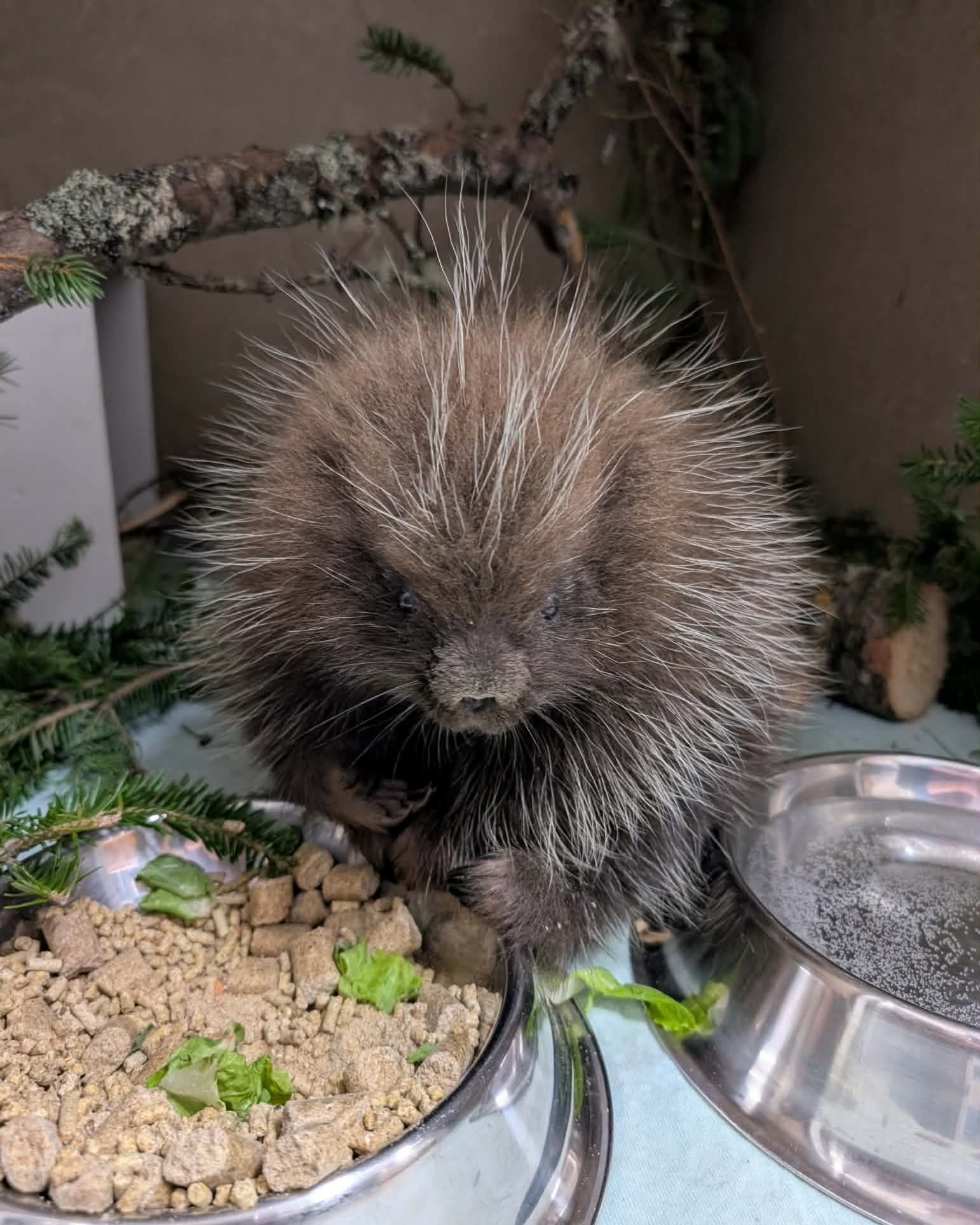
Around here, when it's cold and snowy, they need that hair and qulls. Their main winter adaptation is their coat. Beneath the quills is a dense, woolly underfur that traps air close to the skin. Over that are long, hollow guard hairs and then their quills that both help to reduce wind penetration and to also help hold a layer of warm air around the body. This combination works like a thick, layered jacket.
While in the warm months they are solitary and hang out in trees, in the winter they will use shelter. Porcupines spend much of the winter in dens like tree cavities, rock crevices, hollow logs, or dense fallen conifers, where the wind is blocked and temperatures are more stable. They like a good snowstorm because the snow helps them, rather than harms them. When snow piles up around a den it acts as insulation, keeping the space warmer than the outside air.
While they are mostly solitary, studies and field reports document communal winter denning, with 2–8 individuals sometimes using the same cavity, rock crevice, or hollow log. This is for shelter and heat conservation, not social bonding. More bodies means more heat! Smart! How do they avoid poking each other? By respecting personal space and using communication.
They communicate when coming and going using soft vocalizations like low whines and grunts that the other porks recognize as "coming through, make way!" Everyone makes a path for the porcupine on the move - even other porcupines!