General Interests
Important Information from Nova Scotia Department of Natural Resources
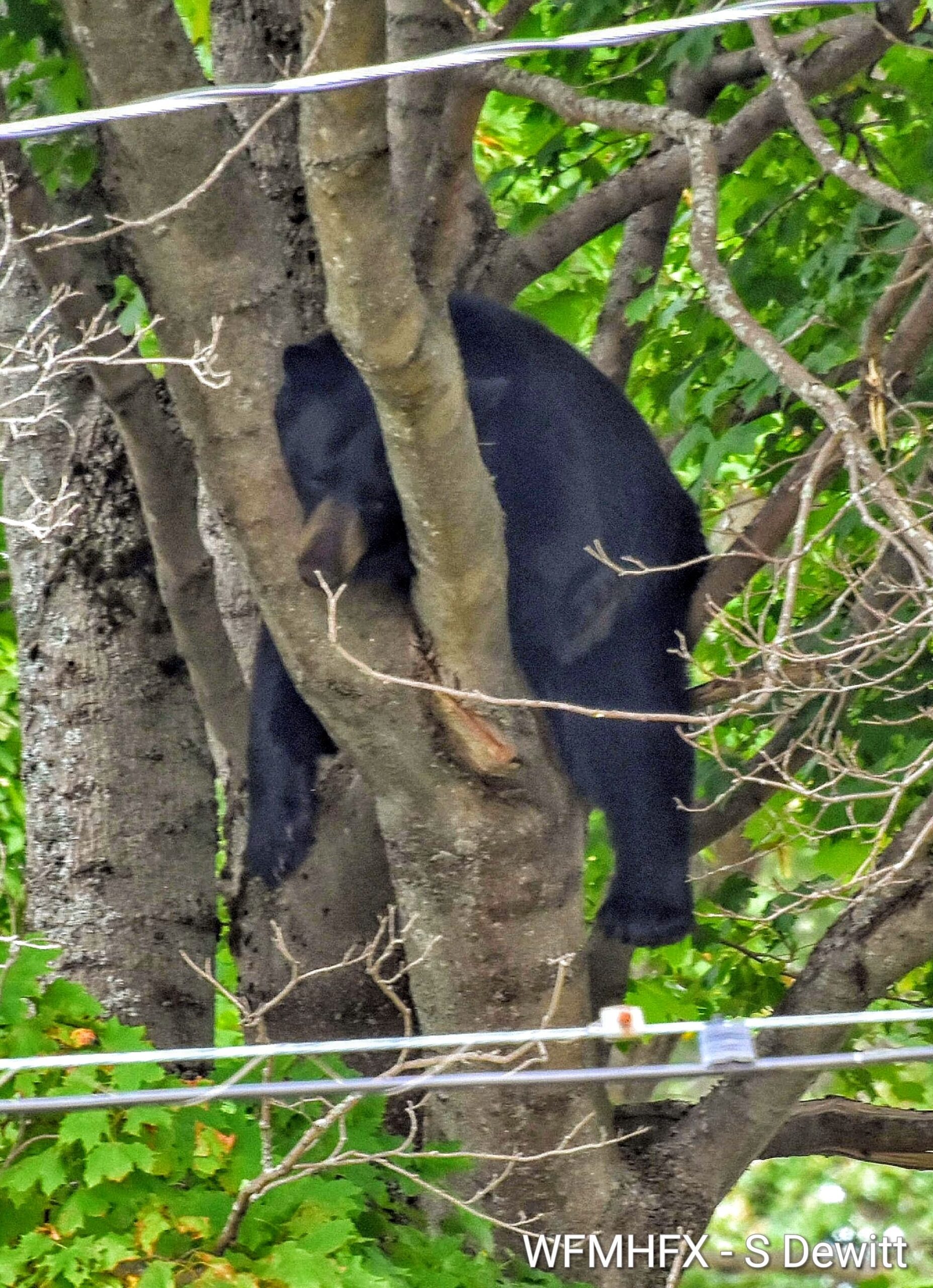
**** Posted via New Glasgow Regional Police
Important Information from Nova Scotia Department of Natural Resources
If you see a bear Black Bear what to do
Bears have been reported in all areas this time of year so here is what to do.
When bears come into a residential area they are usually looking for food. Bears like to eat many of the same foods we enjoy, so we need to be careful about how we handle food and food waste to minimize the odours that attract bears.
When a bear smells food odours coming from a green cart, garbage container, or even a barbecue, the bear regards this as a convenient source of food and it will return to the site again and again. Not only is this annoying for us, it means the bear will become dependent on people for food and may become invasive and destructive.
Black Bears Live Near You - I spotted a bear
I've spotted a black bear on my property. What do I do?
Check the table to see if you have items on your property that could be attracting bears. Take the action listed in the table to remove or secure these items.
Talk to your neighbours about working together to eliminate bear attractants.
Call your local Department of Natural Resources office.
After hours call 1-800-565-2224.
You can call your local police
Removing the food source is almost always the solution. Relocating bears is sometimes done but it does not always solve the problem because bears often return to where they were captured. Also, relocation may negatively affect the bear's wellbeing.
When a bear becomes dependent on people for food, it can become a safety risk for people and property. In rare cases, department staff may need to euthanize a bear for safety reasons. Help keep bears healthy and wild by making sure no human food is available to them.
Black Bears Live Near You - What Attracts Bears
Follow this advice as soon as you see a bear, or you hear that a bear has been in the area.
Bear Attractants
How to keep bears away
Green Carts
store in a shed until pickup day
put out on the morning of green cart pickup, NOT before
clean with a solution of 1 part bleach to 9 parts water after every pickup
freeze these and put them in the green cart just before pickup:
meat, bones, fat, seafood shells
rotting fruit
fruit and vegetable waste such as peels, cores, rotting leaves
Garbage Containers
store in a shed until pickup day
put out on the morning of garbage pickup, NOT before
Garden Compost
stir often to help decomposition
sprinkle lime on smelly compost
leave these out
meat, bones, fat, seafood shells
Bird Feeders
avoid using bird feeders in bear season (April - October). Birds will be able to find natural sources of food at this time.
a bird bath will attract birds, but not bears.
Barbecues
burn off grill at high temperature after every use
clean often
cover when not in use
Pet Food Bowls
keep indoors
Fruit Trees
pick fruit as soon as it ripens
pick fallen fruit off the ground
Preventative Actions:
The most effective way to prevent these situations is to remove (where possible) the attraction of food or to make it difficult to access. Once a bear has found a food source, it will likely return.
If possible, bear proof garbage cans should be made of metal. If cost is a factor, suitable containers can be made of lumber with a minimum dimension of 2”x6” and bolted together. Garbage bins should have a secure cover that cannot be easily opened by a bear.
Empty bins often and inspect them frequently for signs of damage or rot.
Keep bins away from forest cover that would allow bears to get at garbage undetected. Keep vegetation cleared a few meters around a garbage bin to reduce the chance of humans and bears meeting unexpectedly. Never leave garbage lying about your property, especially around houses and camps.
Do not intentionally feed food scraps to other wildlife such as deer, raccoons, squirrels, birds or chipmunks that might attract larger scavengers.
If you feed pets outdoors, make sure leftovers and spillage are removed from deck or yard after feeding time.
Avoid bird feeders in areas where bears are common. If you do use bird feeders, clean them regularly, keep seed dry to prevent spoilage and smell and do not allow spilled seed and husks to accumulate under feeders.
Green bins should be kept in shady by open areas, well away from adjacent forest cover. Meat, fish scraps and kitchen waste that are likely to develop a strong odor, should be frozen and put in the green bin on the morning of the pickup.
If you see a bear:
Stay at a distance and position yourself so that the bear is downwind from you. You may want to leave the area entirely.
Keep dogs under control when in bear habitat.
When in bear habitat make lots of noise. Some serious encounters between bears and humans occur because the bear was unaware of the approaching humans. Talk, sing, carry a portable radio, wear a small bell or rattle a pebble in a tin cup to warn a bear of your presence and give it an opportunity to leave the area.
A dog tied in the yard is a good early warning detection system. Bears are generally afraid of dogs and seldom hang around the vicinity of a barking dog, especially if they have not yet found food in the location.
Never approach a bear or offer it food.
If you encounter a bear:
Stay calm, speak in a firm, authoritative voice while you back away. Do not look the bear directly in the eyes. Try to get upwind of the animal.
Move away slowly while facing the animal. Do not block any escape routes for the bear. Drop something – not food - to distract the bear as you move away.
Do not move loud noises, threatening gestures or sudden moves unless you are being attacked.
Never act physically aggressive towards a bear unless your life depends on it.
If a bear attacks you, fight back with everything you can and make a lot of noise. Use pepper spray if you have it with you. Don’t run.