 In Halifax, specialized apparatus are strategically placed to meet the demands of a growing city.
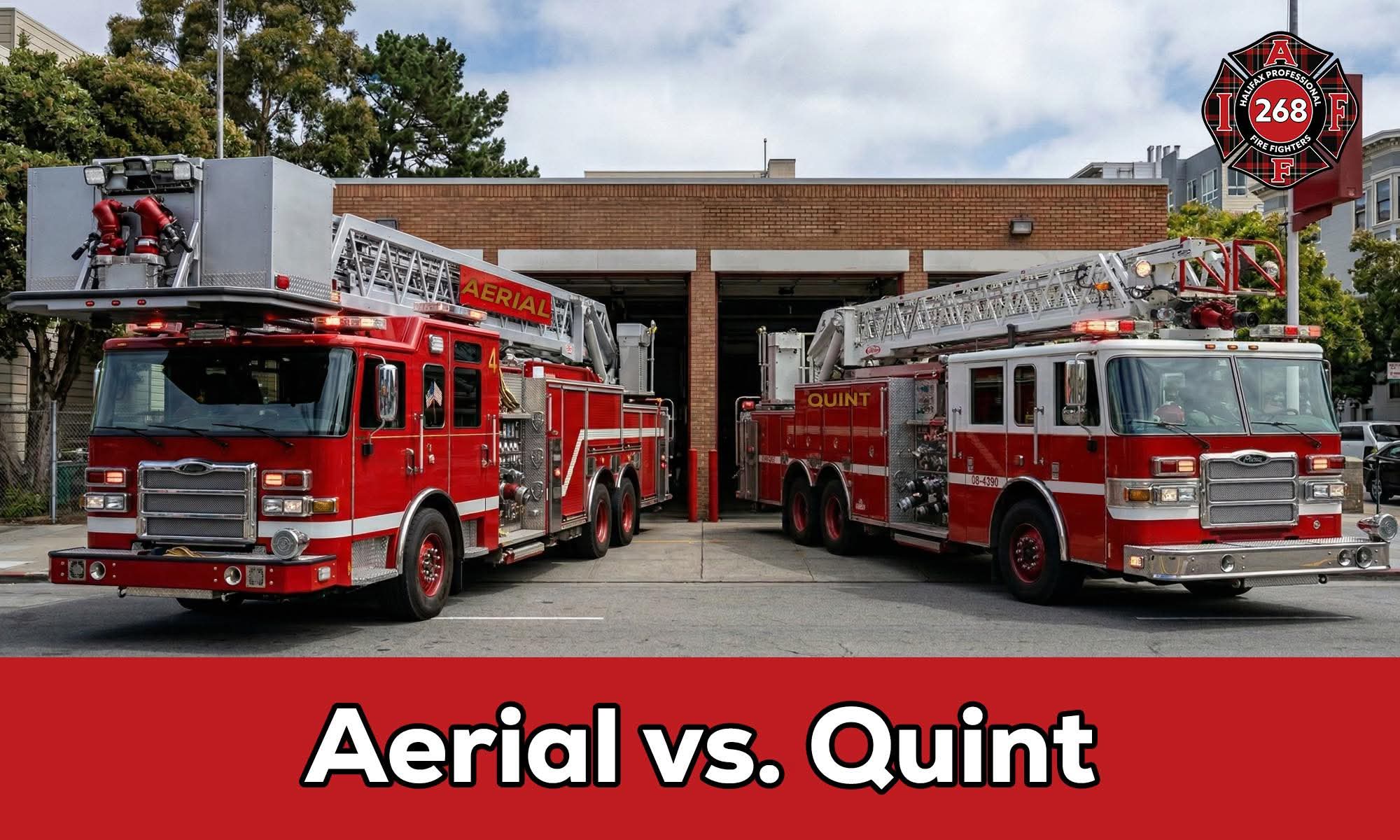
Aerials are dedicated ladder trucks designed for access, rescue, and elevated operations.
You’ll find them at:
• Station 3 (West Street)
• Station 12 (Highfield Park)
• Station 9 (Lower Sackville)
Each of these stations also houses an engine — ensuring the right tools, and the right crews, arrive together. They are positioned in busier areas and often arrive first on scene.
Quints are combination trucks — functioning as both an engine and an aerial, and serving as the only apparatus in their stations.
• Shorter ladder
• Pumping capability
• Often tasked first with fire attack
In Halifax, Quints remain at:
• Station 7 (Clayton Park)
• Station 13 (Downtown Dartmouth)
As the city grows, transitioning toward dedicated aerials ensures more specialized capability on scene — without compromise.
Why it matters:
Aerials require staffing to operate safely and effectively. Industry standards call for a minimum of four fire fighters on these trucks (with a manufacturer recommendation of three). Halifax typically only has two fire fighters per Aerial.
When staffing falls short, crews are reassigned from critical fireground tasks to support aerial operations — impacting efficiency, effectiveness, and fire fighter safety.
Fire fighters in fire stations, on fire trucks, ready to respond — matter.
In Halifax, specialized apparatus are strategically placed to meet the demands of a growing city.
Aerials are dedicated ladder trucks designed for access, rescue, and elevated operations.
You’ll find them at:
• Station 3 (West Street)
• Station 12 (Highfield Park)
• Station 9 (Lower Sackville)
Each of these stations also houses an engine — ensuring the right tools, and the right crews, arrive together. They are positioned in busier areas and often arrive first on scene.
Quints are combination trucks — functioning as both an engine and an aerial, and serving as the only apparatus in their stations.
• Shorter ladder
• Pumping capability
• Often tasked first with fire attack
In Halifax, Quints remain at:
• Station 7 (Clayton Park)
• Station 13 (Downtown Dartmouth)
As the city grows, transitioning toward dedicated aerials ensures more specialized capability on scene — without compromise.
Why it matters:
Aerials require staffing to operate safely and effectively. Industry standards call for a minimum of four fire fighters on these trucks (with a manufacturer recommendation of three). Halifax typically only has two fire fighters per Aerial.
When staffing falls short, crews are reassigned from critical fireground tasks to support aerial operations — impacting efficiency, effectiveness, and fire fighter safety.
Fire fighters in fire stations, on fire trucks, ready to respond — matter.
General Interests
Aerial vs. Quint — What’s the Difference?

**** Via Halifax Professional Firefighters
Aerial vs. Quint — What’s the Difference?
In Halifax, specialized apparatus are strategically placed to meet the demands of a growing city.
Aerials are dedicated ladder trucks designed for access, rescue, and elevated operations.
You’ll find them at:
• Station 3 (West Street)
• Station 12 (Highfield Park)
• Station 9 (Lower Sackville)
Each of these stations also houses an engine — ensuring the right tools, and the right crews, arrive together. They are positioned in busier areas and often arrive first on scene.
Quints are combination trucks — functioning as both an engine and an aerial, and serving as the only apparatus in their stations.
• Shorter ladder
• Pumping capability
• Often tasked first with fire attack
In Halifax, Quints remain at:
• Station 7 (Clayton Park)
• Station 13 (Downtown Dartmouth)
As the city grows, transitioning toward dedicated aerials ensures more specialized capability on scene — without compromise.
Why it matters:
Aerials require staffing to operate safely and effectively. Industry standards call for a minimum of four fire fighters on these trucks (with a manufacturer recommendation of three). Halifax typically only has two fire fighters per Aerial.
When staffing falls short, crews are reassigned from critical fireground tasks to support aerial operations — impacting efficiency, effectiveness, and fire fighter safety.
Fire fighters in fire stations, on fire trucks, ready to respond — matter.
In Halifax, specialized apparatus are strategically placed to meet the demands of a growing city.
Aerials are dedicated ladder trucks designed for access, rescue, and elevated operations.
You’ll find them at:
• Station 3 (West Street)
• Station 12 (Highfield Park)
• Station 9 (Lower Sackville)
Each of these stations also houses an engine — ensuring the right tools, and the right crews, arrive together. They are positioned in busier areas and often arrive first on scene.
Quints are combination trucks — functioning as both an engine and an aerial, and serving as the only apparatus in their stations.
• Shorter ladder
• Pumping capability
• Often tasked first with fire attack
In Halifax, Quints remain at:
• Station 7 (Clayton Park)
• Station 13 (Downtown Dartmouth)
As the city grows, transitioning toward dedicated aerials ensures more specialized capability on scene — without compromise.
Why it matters:
Aerials require staffing to operate safely and effectively. Industry standards call for a minimum of four fire fighters on these trucks (with a manufacturer recommendation of three). Halifax typically only has two fire fighters per Aerial.
When staffing falls short, crews are reassigned from critical fireground tasks to support aerial operations — impacting efficiency, effectiveness, and fire fighter safety.
Fire fighters in fire stations, on fire trucks, ready to respond — matter.