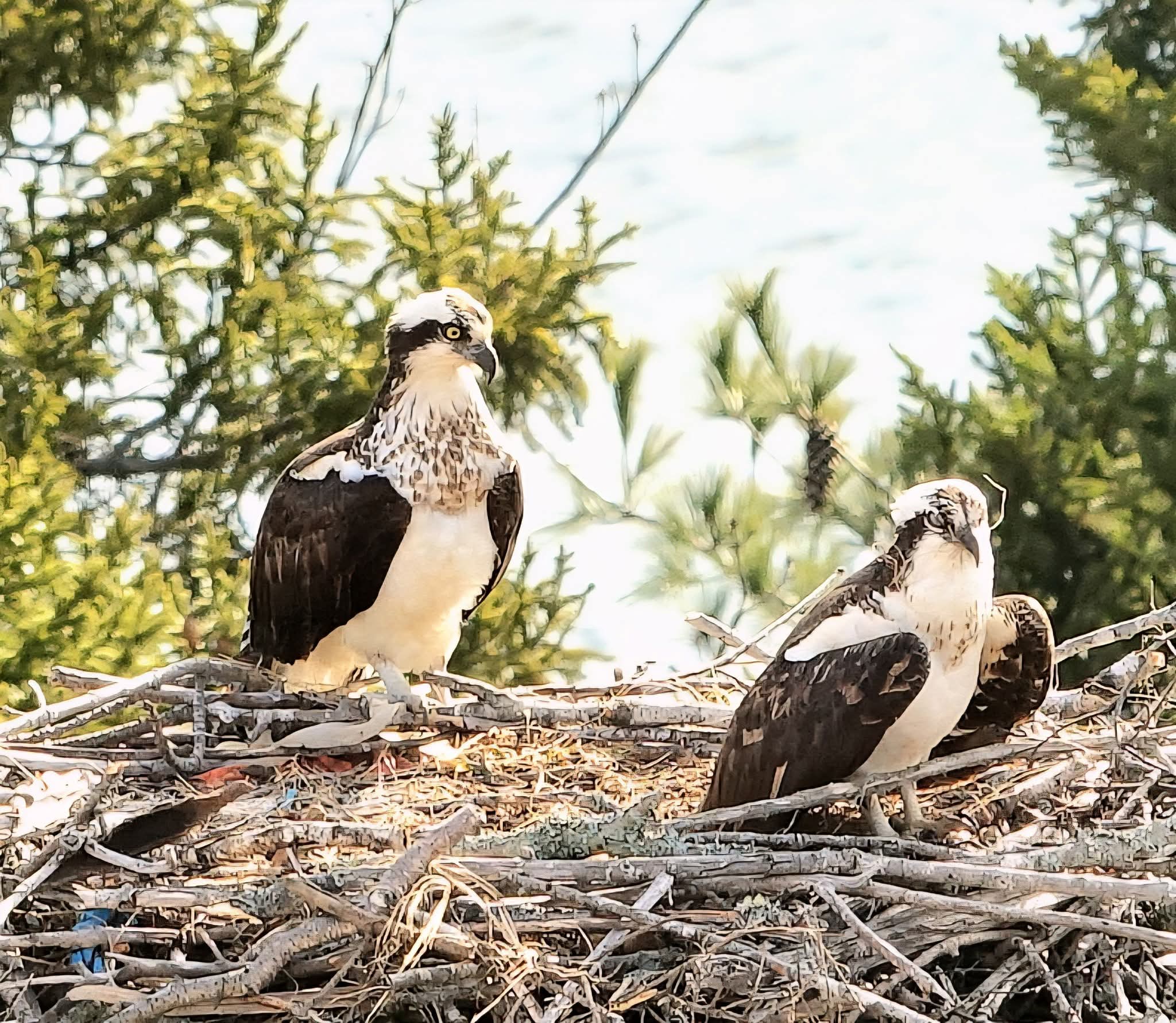
 That stance you’re seeing from Oscar (wings slightly out, kind of tense and “on edge”) is usually a territorial or defensive posture. Male Osprey will often do this when:
A new or unfamiliar female shows up at the nest
They’re unsure if she’s a mate… or a threat
They’re trying to assert control over the nest site
If it’s not Ethel, then Oscar is basically saying:
“Umm… excuse me, ma’am… this is MY house… and you are NOT on the guest list.”
But here’s where it gets really fascinating:
Sometimes this behavior can shift quickly. If the female persists and shows the right signals (submissive posture, calling, sticking around), Oscar might:
Gradually accept her as a new mate, OR
Continue to drive her off aggressively
That wing stance is like a middle ground — not full attack, but definitely not welcoming either.
Also worth noting:
Ospreys are loyal but practical. If Ethel hasn’t returned yet, Oscar may eventually accept another female to secure the breeding season.
Oscar with an unknown female
Captured by Don Dennis
Follow Osprey of Nova Scotia on Facebook here
https://www.facebook.com/groups/5845705578796111/?ref=share&mibextid=NSMWBT
That stance you’re seeing from Oscar (wings slightly out, kind of tense and “on edge”) is usually a territorial or defensive posture. Male Osprey will often do this when:
A new or unfamiliar female shows up at the nest
They’re unsure if she’s a mate… or a threat
They’re trying to assert control over the nest site
If it’s not Ethel, then Oscar is basically saying:
“Umm… excuse me, ma’am… this is MY house… and you are NOT on the guest list.”
But here’s where it gets really fascinating:
Sometimes this behavior can shift quickly. If the female persists and shows the right signals (submissive posture, calling, sticking around), Oscar might:
Gradually accept her as a new mate, OR
Continue to drive her off aggressively
That wing stance is like a middle ground — not full attack, but definitely not welcoming either.
Also worth noting:
Ospreys are loyal but practical. If Ethel hasn’t returned yet, Oscar may eventually accept another female to secure the breeding season.
Oscar with an unknown female
Captured by Don Dennis
Follow Osprey of Nova Scotia on Facebook here
https://www.facebook.com/groups/5845705578796111/?ref=share&mibextid=NSMWBT
In The Spotlight
See Oscars stance??

**** Via Osprey of Nova Scotia
See Oscars stance??
That stance you’re seeing from Oscar (wings slightly out, kind of tense and “on edge”) is usually a territorial or defensive posture. Male Osprey will often do this when:
A new or unfamiliar female shows up at the nest
They’re unsure if she’s a mate… or a threat
They’re trying to assert control over the nest site
If it’s not Ethel, then Oscar is basically saying:
“Umm… excuse me, ma’am… this is MY house… and you are NOT on the guest list.”
But here’s where it gets really fascinating:
Sometimes this behavior can shift quickly. If the female persists and shows the right signals (submissive posture, calling, sticking around), Oscar might:
Gradually accept her as a new mate, OR
Continue to drive her off aggressively
That wing stance is like a middle ground — not full attack, but definitely not welcoming either.
Also worth noting:
Ospreys are loyal but practical. If Ethel hasn’t returned yet, Oscar may eventually accept another female to secure the breeding season.
Oscar with an unknown female
Captured by Don Dennis
Follow Osprey of Nova Scotia on Facebook here
https://www.facebook.com/groups/5845705578796111/?ref=share&mibextid=NSMWBT
That stance you’re seeing from Oscar (wings slightly out, kind of tense and “on edge”) is usually a territorial or defensive posture. Male Osprey will often do this when:
A new or unfamiliar female shows up at the nest
They’re unsure if she’s a mate… or a threat
They’re trying to assert control over the nest site
If it’s not Ethel, then Oscar is basically saying:
“Umm… excuse me, ma’am… this is MY house… and you are NOT on the guest list.”
But here’s where it gets really fascinating:
Sometimes this behavior can shift quickly. If the female persists and shows the right signals (submissive posture, calling, sticking around), Oscar might:
Gradually accept her as a new mate, OR
Continue to drive her off aggressively
That wing stance is like a middle ground — not full attack, but definitely not welcoming either.
Also worth noting:
Ospreys are loyal but practical. If Ethel hasn’t returned yet, Oscar may eventually accept another female to secure the breeding season.
Oscar with an unknown female
Captured by Don Dennis
Follow Osprey of Nova Scotia on Facebook here
https://www.facebook.com/groups/5845705578796111/?ref=share&mibextid=NSMWBT