**** Via Hope for Wildlife
Waiting for room service to finish!
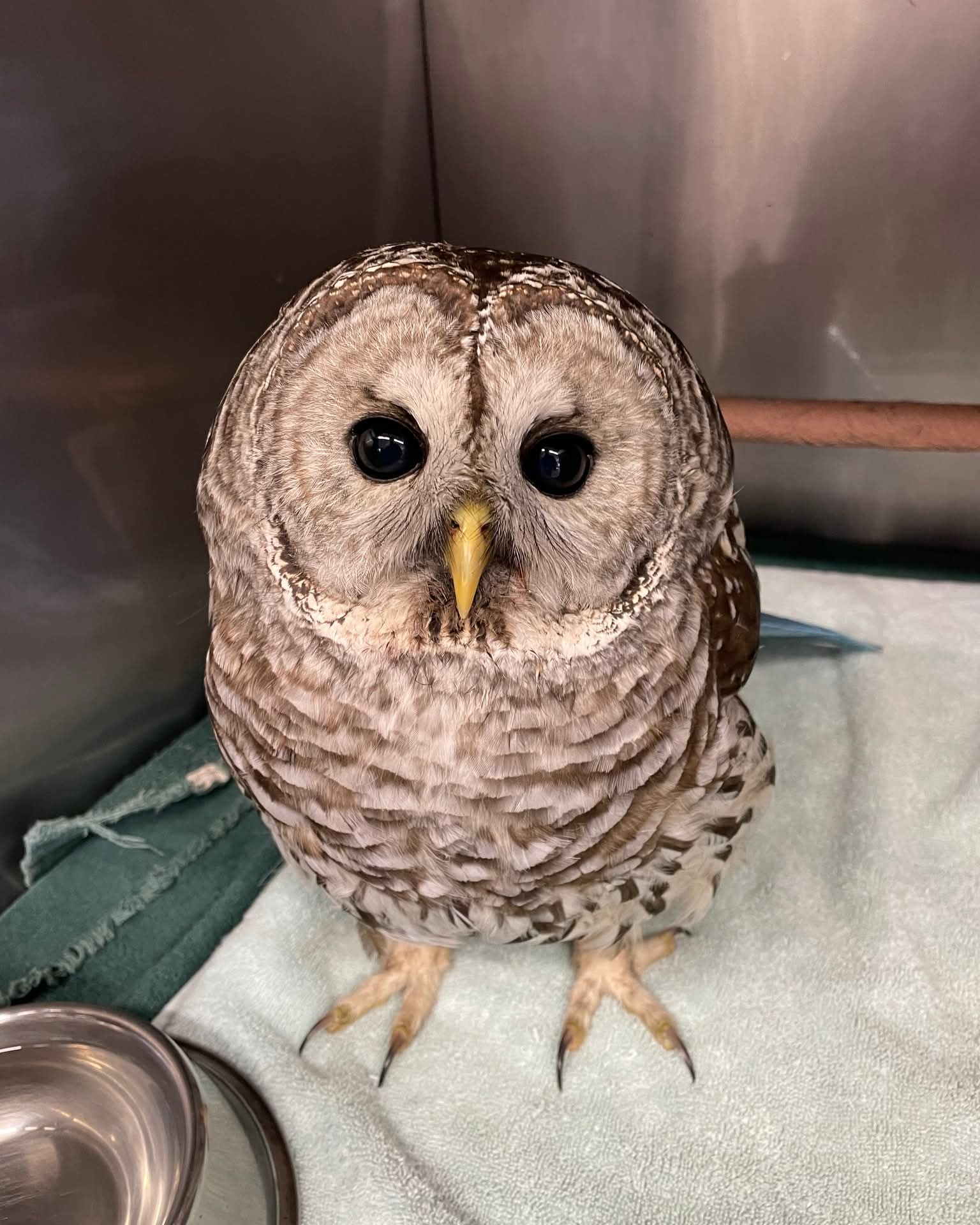
This beautiful Barred Owl arrived after suffering an eye injury and head trauma after being hit by a car. He's the 17th Barred Owl patient of 2026! He's been recovering well, but still has some lingering eye issues we need to monitor.
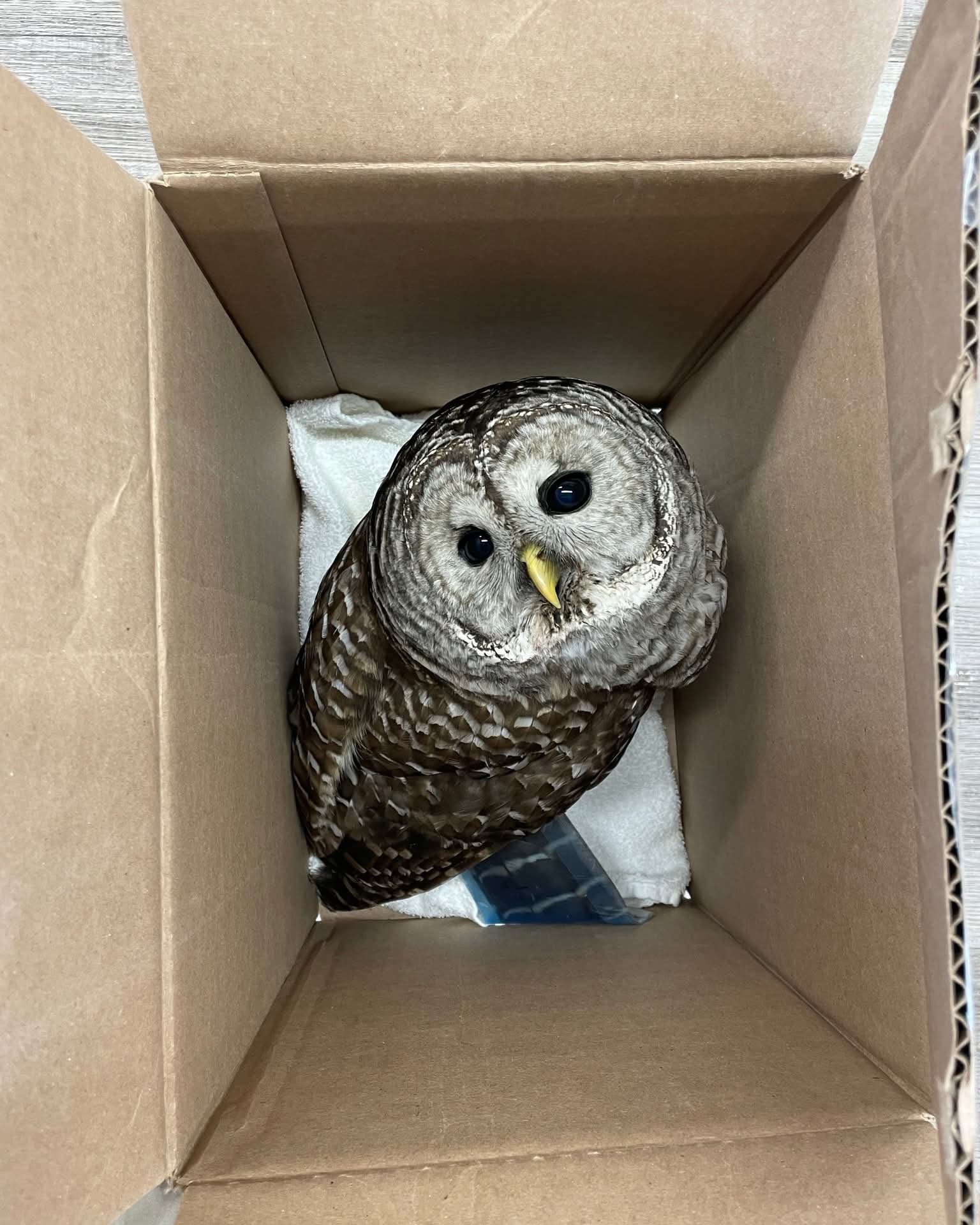
Since he can fly, we placed him in a nice soft-sided cardboard box for his safety. Using a cage with wire or bars risks him breaking a flight feather, and we certainly don't want that. In fact, we go out of our way to protect flight feathers - as you can see a rigid blue tail guard is protecting his tail feathers. That's because a broken or missing flight feather in birds can take months to regrow, even up to a year for birds like eagles. And we don't want a patient that's healed up from their original injury to have to stay even longer because important flight feathers are missing or damaged. Those feathers are important, not just for aerodynamics.
Barred Owls are quite silent fliers, especially when swooping for prey. Their feathers aren't soft merely to help keep them warm in winter, their entire wing is built as a noise-reduction system, with different feather features each reducing sound in a different way. The leading edge of the primary flight feather has comb-like serrations called fimbriae that reduce the swooshy wind turbulence noise. The velvety texture of the features helps to absorb sound, and the trailing edges of their wings are soft and ragged, helping reduce noise of air coming off the wing.