In The Spotlight
Health And Wellness
Instead of Hibernation, cold-blooded animals do what is called Brumation
**** Via Shubenacadie Wildlife Park
*BRUMATION BREAK!*
We're taking a break from our Mammal Monday Hibernation posts to talk about what our reptilian and amphibian pals do during the winter months.
Instead of Hibernation, cold-blooded animals do what is called Brumation.
Here are some key differences:
Mammals eat increased amounts of food leading up to their hibernation to sustain them throughout the entire cold season, but cold-blooded animals begin to eat less food leading up to a brumation period.
Hibernation lasts much longer than brumation tends to. Hibernation spans the entire winter season. Brumation, on the other hand, can occur at any time of the year when conditions become unfavorable. For example, if there's less food or water available, or the temperature/humidity levels change (this could be during cold winter months, but also during dry seasons and droughts). Brumation might only last one or two months, but it can also be even more sporadic than that!
Here in Nova Scotia we have species such as frogs, toads, and turtles who will brumate when the weather gets too cold. Different species do this in different ways:
🐸Toads burrow deep underground, below the frost line, and stay buried for the entire winter.
🧊Some frog species such as wood frogs and spring peepers brumate under logs or leaves, but they have a special "anti-freeze" ability (increased glucose levels in their blood) which keeps their blood from freezing! Their heartrate, breathing, and blood flow will stop during this time, but once temperatures rise in the springtime they thaw out and are back to normal!
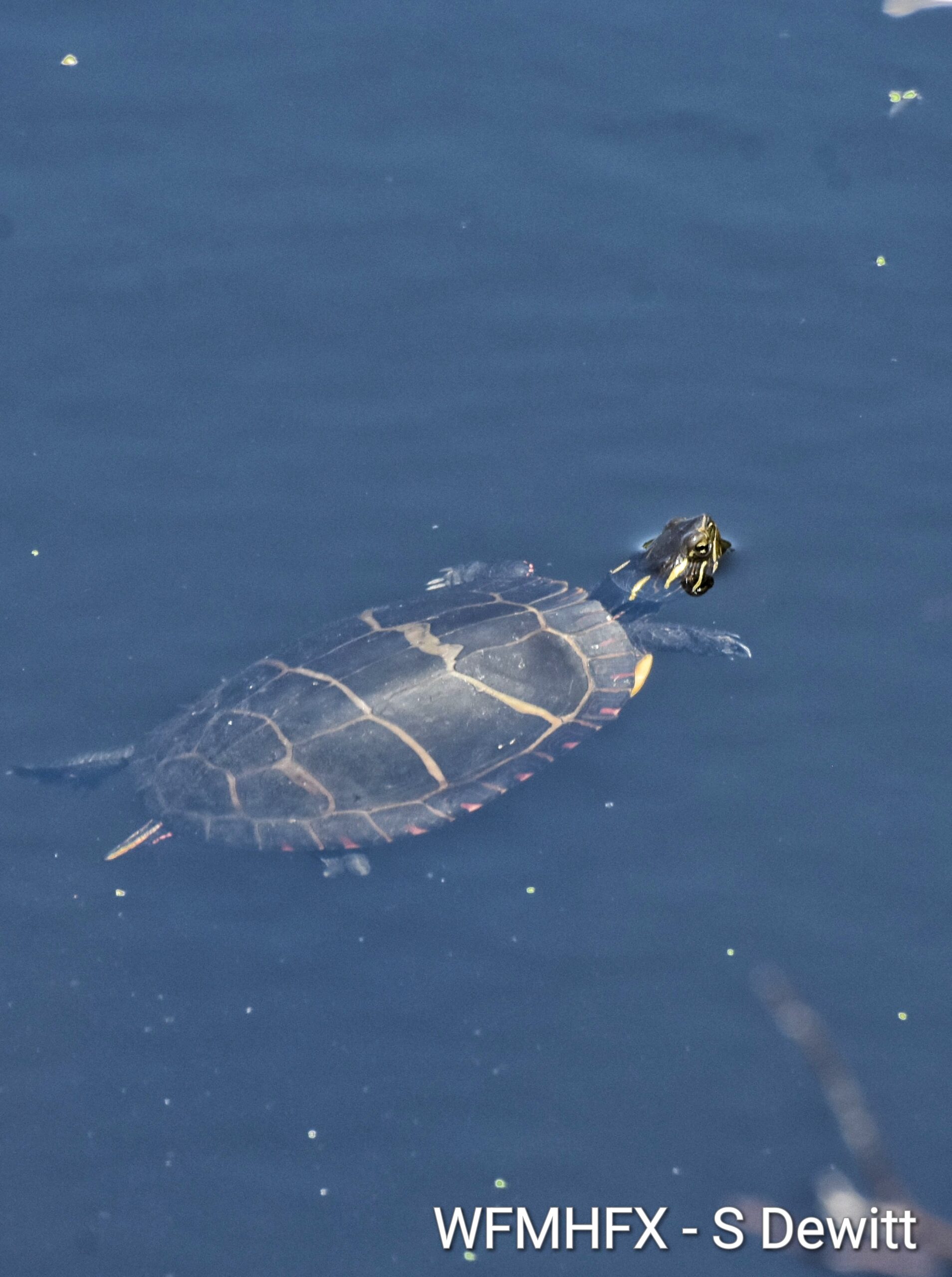
🐢Other frog species, and also turtles, brumate underwater beneath the ice! Both of these species have lungs and do need to breath oxygen to survive... but they do something incredible during the winter! The cold water holds more oxygen, so frogs simply absorb that oxygen through their permeable skin. Turtles have developed special tissues in their throats and at their tail opening that allows oxygen to permeate there. This allows them to comfortably remain under the water for the entire winter season!