 We typically get about 40,000 calls/texts each year to our help line, but a lot of those calls turn out to be educational-type calls, or animals that fortunately didn't need any help. Our intake was up about 8% from last year, and the biggest day we had for patients being admitted was June 26th, when 73 arrived. That doesn't beat our record of over 100 in a single day a few years ago! Our most common animals continue to be raccoons, pigeons, and squirrels, but we did admit 54 species that we only had a single patient from, like a Glossy Ibis and a Tennessee Warbler.
Thank you all for a wonderful year of supporting our native injured and orphaned wildlife. What will 2026 bring, who knows? But the animals will continue to matter.
*** slide provided by Jessie the Bobcat
We typically get about 40,000 calls/texts each year to our help line, but a lot of those calls turn out to be educational-type calls, or animals that fortunately didn't need any help. Our intake was up about 8% from last year, and the biggest day we had for patients being admitted was June 26th, when 73 arrived. That doesn't beat our record of over 100 in a single day a few years ago! Our most common animals continue to be raccoons, pigeons, and squirrels, but we did admit 54 species that we only had a single patient from, like a Glossy Ibis and a Tennessee Warbler.
Thank you all for a wonderful year of supporting our native injured and orphaned wildlife. What will 2026 bring, who knows? But the animals will continue to matter.
*** slide provided by Jessie the Bobcat
Health And Wellness
HFW typically get about 40,000 calls/texts each year to our help line, but a lot of those calls turn out to be educational-type calls, or animals that fortunately didn't need any help

Wow!
****Via Hope for Wildlife
HAPPY NEW YEAR!
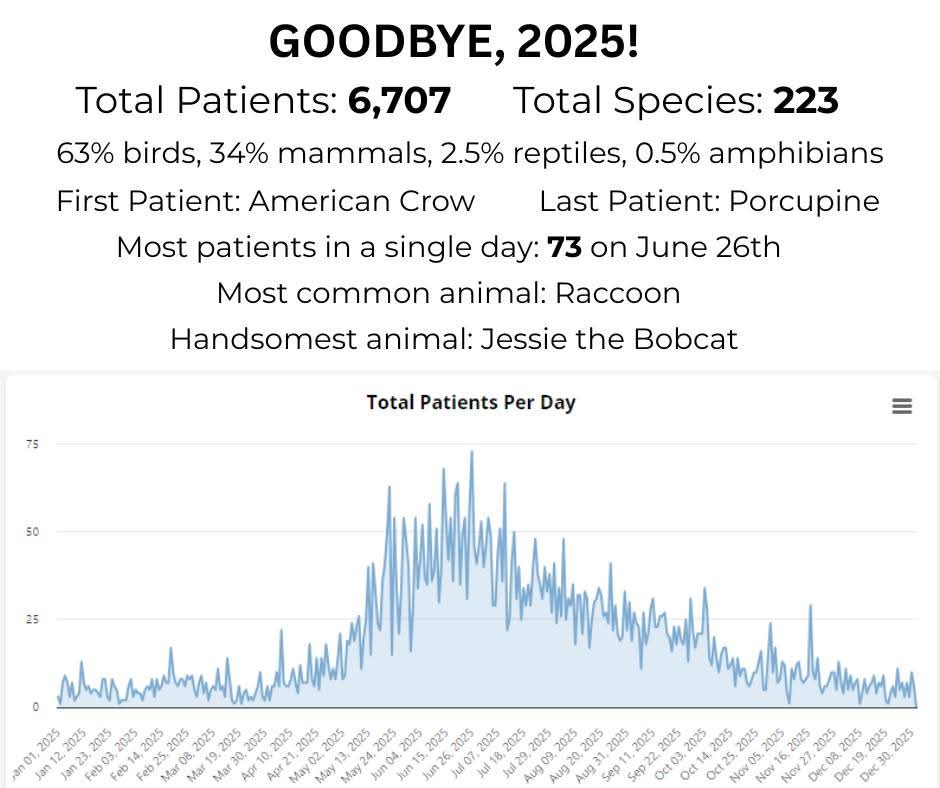
So long, 2025. What a year it was! We thought you'd enjoy seeing a little data of what a year looks like at Hope for Wildlife.
We typically get about 40,000 calls/texts each year to our help line, but a lot of those calls turn out to be educational-type calls, or animals that fortunately didn't need any help. Our intake was up about 8% from last year, and the biggest day we had for patients being admitted was June 26th, when 73 arrived. That doesn't beat our record of over 100 in a single day a few years ago! Our most common animals continue to be raccoons, pigeons, and squirrels, but we did admit 54 species that we only had a single patient from, like a Glossy Ibis and a Tennessee Warbler.
Thank you all for a wonderful year of supporting our native injured and orphaned wildlife. What will 2026 bring, who knows? But the animals will continue to matter.
*** slide provided by Jessie the Bobcat
We typically get about 40,000 calls/texts each year to our help line, but a lot of those calls turn out to be educational-type calls, or animals that fortunately didn't need any help. Our intake was up about 8% from last year, and the biggest day we had for patients being admitted was June 26th, when 73 arrived. That doesn't beat our record of over 100 in a single day a few years ago! Our most common animals continue to be raccoons, pigeons, and squirrels, but we did admit 54 species that we only had a single patient from, like a Glossy Ibis and a Tennessee Warbler.
Thank you all for a wonderful year of supporting our native injured and orphaned wildlife. What will 2026 bring, who knows? But the animals will continue to matter.
*** slide provided by Jessie the Bobcat