Transforming Transit

Creating a more convenient, cost-effective and environmentally responsible transit system.
The municipality is Transforming Transit through two Halifax Transit projects — the Rapid Transit Strategy, which encompasses four Bus Rapid Transit (BRT) lines and three new ferry routes, and the Electric Bus Proposal.
These projects align with the municipality's Integrated Mobility Plan by improving transit services. They also align with provincial and federal climate targets, help achieve the goals and actions as outlined in HalifACT, and reflect Regional Council's recognition to address climate change as a serious and urgent threat to our community - per the January 29, 2019, declaration of a climate emergency.
The municipality is now seeking provincial and federal funding to make these projects a reality.
The Rapid Transit Strategy — a faster, better-connected, more frequent and easier-to-use transit service.
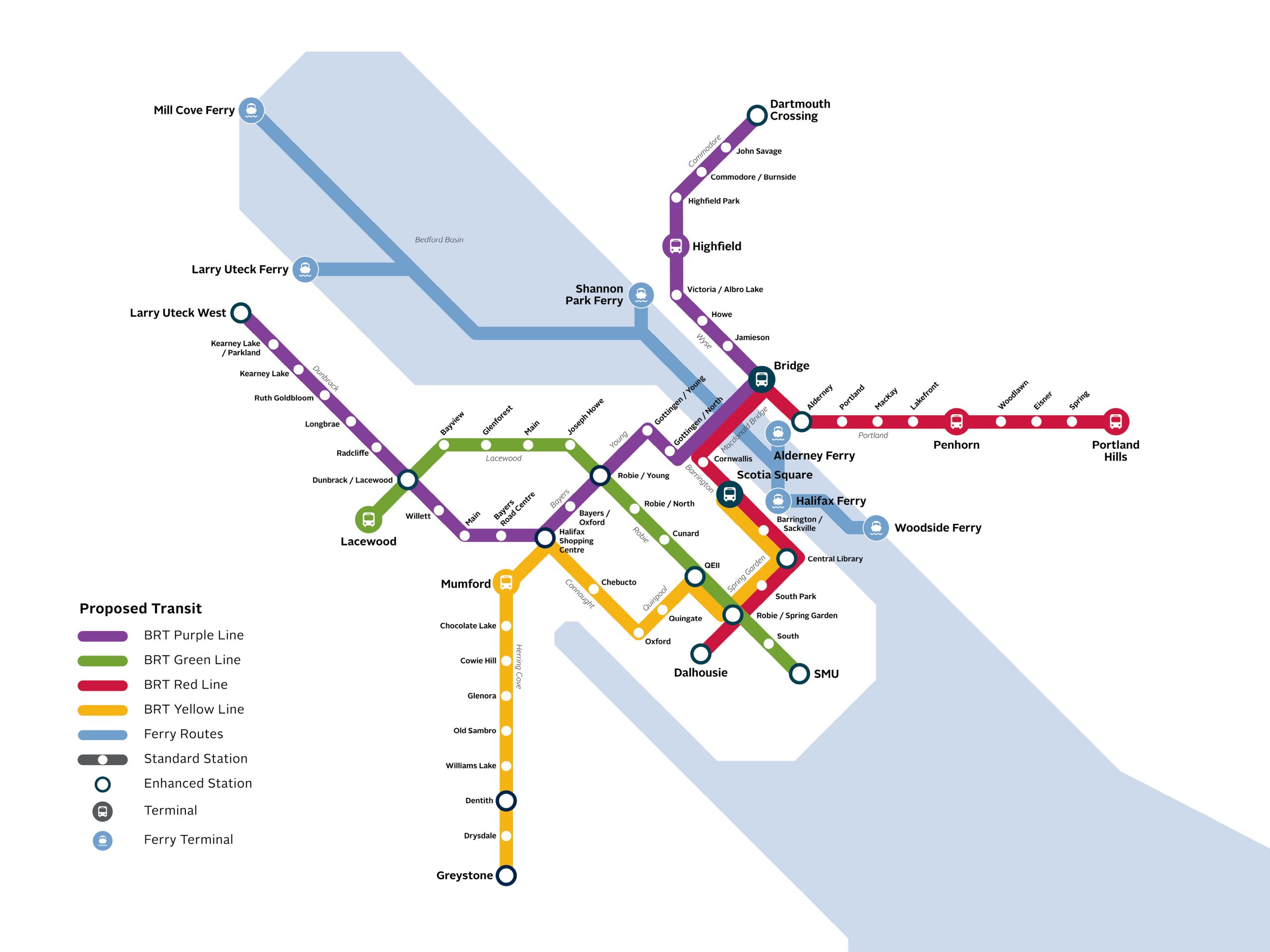
The Rapid Transit Strategy includes a network of four BRT lines and three new ferry routes, which will promote the creation of more compact and walkable communities and increase mobility optionsalternative to private vehicles.
Four BRT lines
The BRT lines will operate every ten minutes and will be within walking distance of approximately 120,000 residents, helping in the creation of complete communities by orienting land use towards transit and reducing the need to invest in road expansions. In turn, complete communities contribute to improved public health from higher rates of walking, rolling, and cycling in conjunction with transit use.
| Investment | Amount | Timeline |
|---|---|---|
| Procurement of buses (33) | $36M to $64M | Years 2-6 |
| Design and construction of BRT stations (130) | $62M | Years 2-6 |
| Transit priority lanes and intersection improvements | $86M | Years 2-8 |
| Additional studies, functional plans and project overhead | $5M | Years 1-8 |
| Total | $189M to $217M | 7–8 years |
Three new ferry routes
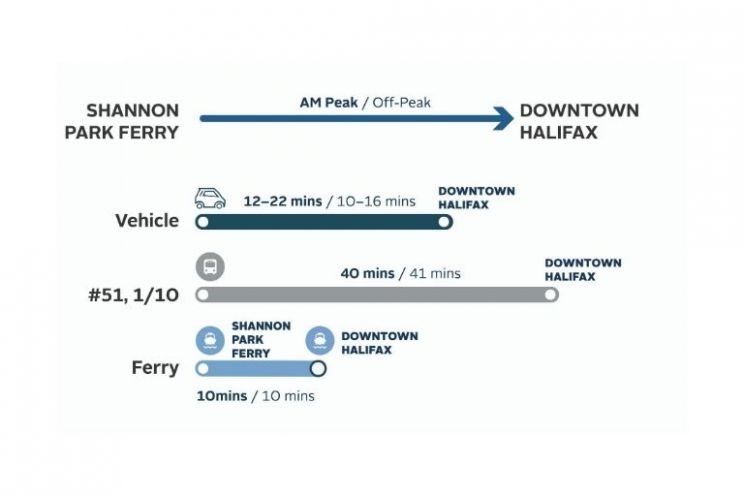
The three new proposed ferry routes will provide direct connections between downtown Halifax and new terminals at Mill Cove, Larry Uteck and Shannon Park. These routes would provide reliable service with travel times to downtown Halifax likely faster than travel by private vehicle or bus. The routes are anticipated to use multi-hull catamaran vessels with a 150-passenger capacity and a single deck, capable of operating at higher speeds while minimizing wake effects.
| Investment | Amount | Timeline |
|---|---|---|
| Procurement of vessels (10) | $71M | Years 1-4 |
| Halifax Ferry Terminal upgrade | $17M | Years 1-3 |
| Mill Cove Terminal | $6M to $18M | Years 1-3 |
| Larry Uteck Terminal | $6M to $7M | Years 1-4 |
| Shannon Park Terminal | $4M to $8M | Aligned with development |
| Additional studies, functional plans and project overhead | $4M | Year 1 onward |
| Total | $108M to $125M | 4+ years |
The Electric Bus Proposal — reducing air and noise pollution to make streets and communities safer and healthier for everyone.
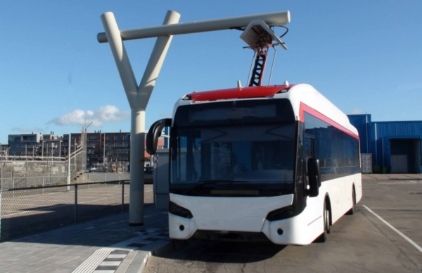
The Electric Bus Proposal will reduce greenhouse gas emissions as well as operating costs for Halifax Transit by converting Halifax Transit buses to a low-carbon or zero-emission fleet.
The goal is to electrify more than 200 buses (over 50 per cent of the fleet of 350 buses) by 2028. In 2019-20, an electric bus could save an estimated $24,000 in annual operating costs per bus when compared to diesel. In 2028-29, the potential reduction in maintenance costs could surpass $6 million annually for 210 battery electric buses.
| Investment | Amount | Timeline |
|---|---|---|
| Ragged Lake Transit Centre expansion | $12M | Years 1–2 |
| 54 electric buses + charging stations | $64M to $73M | Years 3–4 |
| Burnside Transit Centre replacement | $165M | Years 2–7 |
| 156 electric buses + charging stations | $159M to $210M | Years 5–8 |
| Total | $400M to $460M | 8 years |
Additional project benefits
- Reduces household transportation costs.
- Makes transportation more sustainable by helping to reduce vehicle use and decrease greenhouse gas (GHG) emissions, helping to mitigate the climate crisis.
- Builds more equitable communities by providing mobility options for those unable to access private vehicles.
- Enhances the distribution of economic growth by increasing mobility options for all residents.
- Helps attract newcomers and businesses to the region.
- Reduces traffic congestion which contributes to higher economic productivity compared to a future with relatively higher auto use.
- Reduces municipal servicing costs due to a more compact development pattern.
- Increases property tax revenue from higher land values around the proposed Bus Rapid Transit lines.
What happens next?
In May 2020, Regional Council approved the staff report including these strategic transit projects, a crucial first step in making these initiatives a reality.
However, timely completion of the full scope of both projects will only be possible by partnering with other levels of government for funding. As the largest capital investment ever made to public transit in Halifax, these projects represent a complex undertaking that will take place over the next seven to eight years and will require additional dedicated staff resources.
The municipality believes these proposals are well positioned to receive support from other levels of government, as they align with key provincial and federal priorities aimed at tackling climate change and improving public transit.
The municipality has submitted both proposals to the Province of Nova Scotia for funding through the federal government's Public Transit Infrastructure Fund and the Green Infrastructure Fund, as well as any additional stimulus funding streams that may become available.