Ultraviolet in the sun’s spectrum
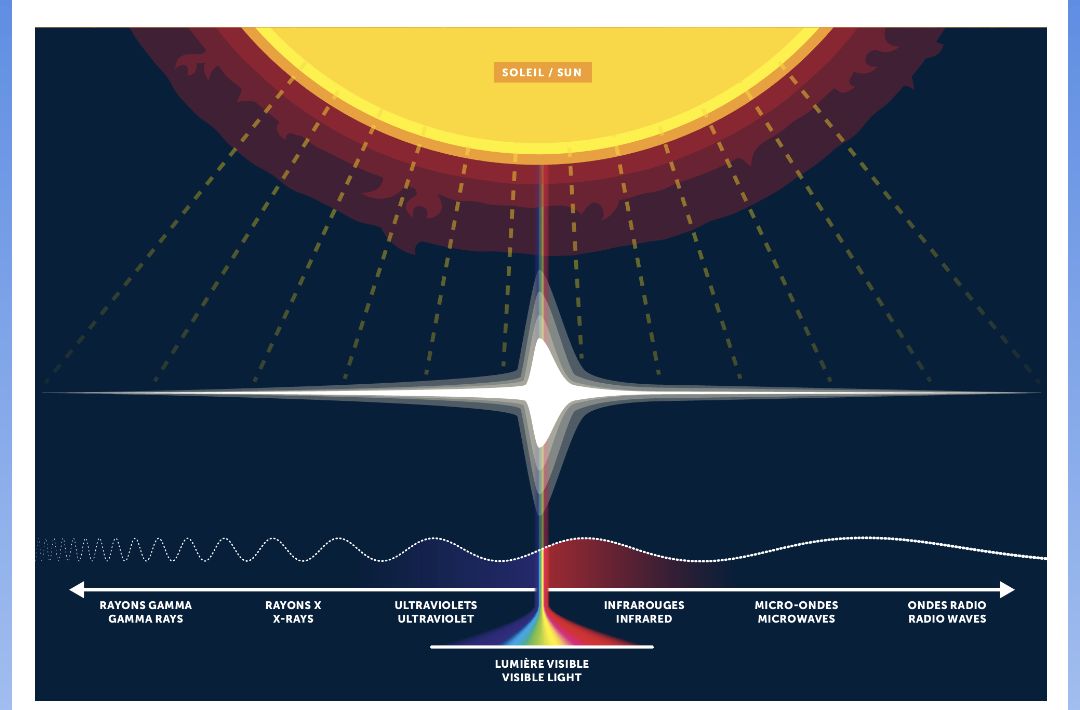
Solar energy passes through the atmosphere in the form of electromagnetic radiation of different wavelengths that we see as light or feel as heat. These waves are partially reflected or absorbed by the atmosphere, but most of their energy is converted into heat by the land and oceans. Today, meteorologists can measure solar radiation and how it interacts with the atmosphere to “visualize” various weather phenomena, including clouds’ thickness and altitude. Although most of the solar radiation that reaches the Earth is in the visible spectrum, we also receive significant amounts of infrared and ultraviolet (UV) radiation. About half of the energy sent out by the sun is in the form of light. About 40% happens in infrared and 10% in UV.