Fire Weather
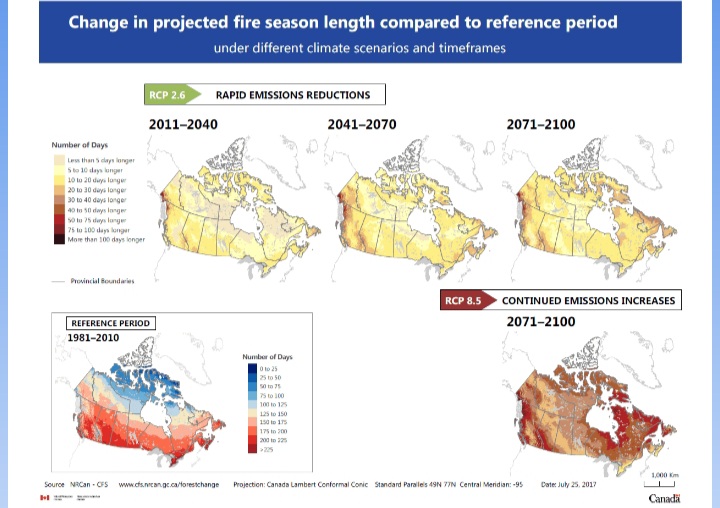
Since the beginning of July, a combination of dry weather, lightning, and unusual heat has fueled hundreds of wildland fires in northern Canada. Smoke from wildfires is causing poor air quality and reducing visibility for parts of British Columbia, Yukon, Northwest Territories and Alberta. Weather and fire On July 12, colossal clouds ringed with wildfire smoke, called pyrocumulonimbus, towered over Yellowknife. When a fire becomes powerful enough, it creates its own weather systems akin to thunderstorms. This is when pyrocumulonimbus clouds form. They contain rain that forms above a source of heat, such as wildfire or volcanic eruption. Usually, forest fires are propagated by the wind, but a massive blaze can carry so much heat that its smoke plume rises up to 10–20 km into the sky. Because the smoke plume contains dust, heat and moisture, the smoke can condense and form clouds when it reaches high into the atmosphere.