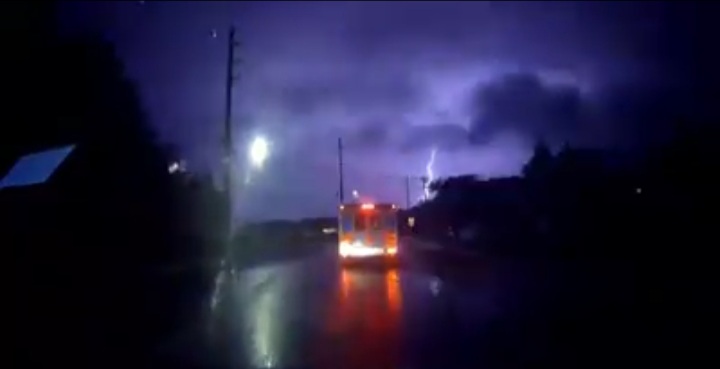
Thunderstorms in Canada

From hailstorms to heat waves, thunderstorms to tornadoes, severe weather in Canada takes many different forms during the warmer months of the year. As temperatures start to climb the risks of seeing “summer” severe weather increase right across the country. Thunderstorms A thunderstorm is a violent, generally short-lived storm that is associated with lightning, thunder, dark clouds, heavy rain or hail, and often strong and gusty winds. One of the more distinctive sounds of summer is thunder. But did you know that thunder is simply the sound that lightning makes? A lightning bolt heats the air—through which it travels—to about 30,000 °C. This rapid heating, followed by rapid cooling, creates shock waves that, when they reach our ears, we hear as thunder. What is thundersnow? Though rare, thundersnow is merely a thunderstorm that occurs in an air mass cold enough to generate snow rather than rain. Record “cold topped” thunderstorm. Powerful thunderstorms can reach heights 10–15 km, but some particularly strong storms can punch even higher into the atmosphere. Scientists have recently concluded research showing the top of one tropical storm cloud system, on December 29, 2018, reached a height of 20.5 km and had a cloud top temperature of -111 °C. This is very likely a new Earth low-temperature record.