2026 Atlantic hurricane season

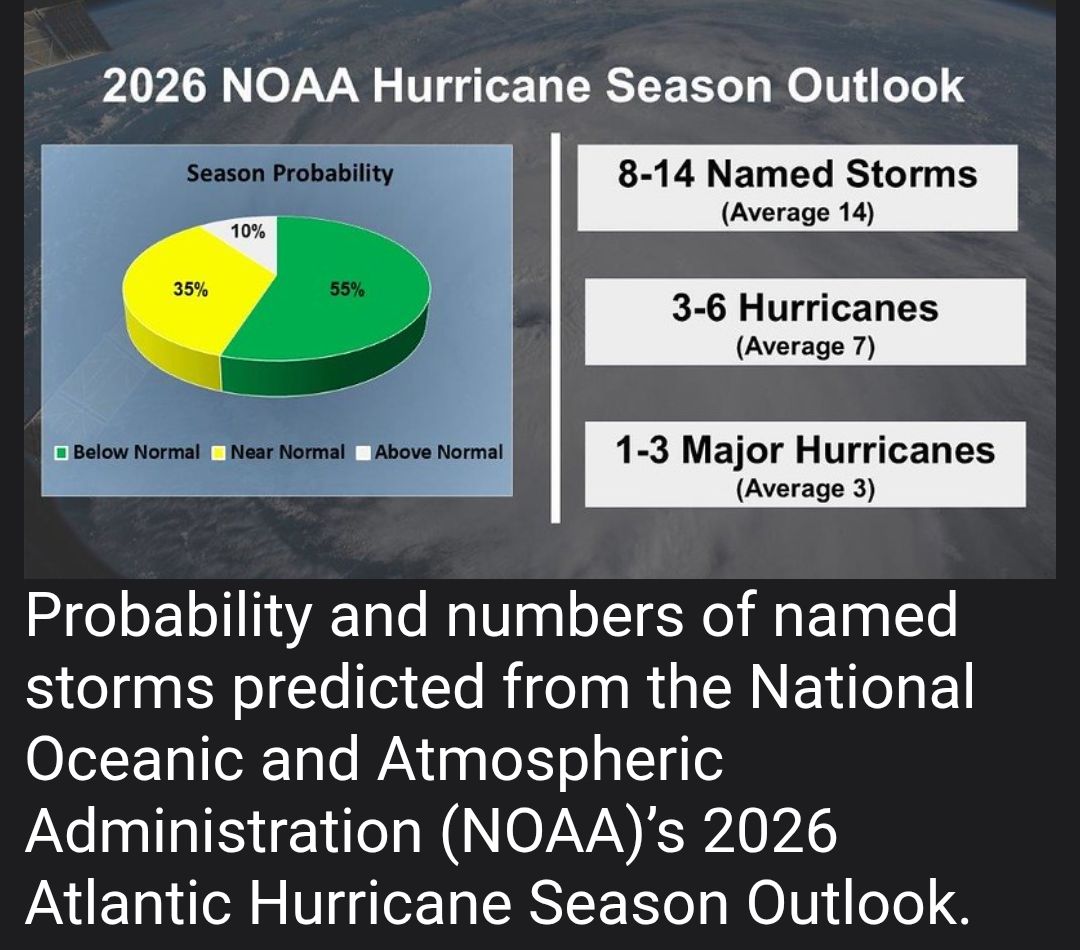
June 1st will mark the start of the Atlantic hurricane season, which runs through the end of November. This year, forecasters are predicting a below-average season. It is the first time since 2015 that the Atlantic basin is expected to see a near-to-below-normal hurricane season. Factors influencing the seasonal forecast
 Several key factors can influence how active the Atlantic hurricane season becomes. This year, Atlantic sea surface temperatures are expected to be slightly warmer than normal, while trade winds are forecast to be slightly weaker than average. These conditions would typically support more storm development.
However, one of the most influential factors this year is the expected development of El Niño.
El Niño is a warming of sea surface temperatures in the equatorial Pacific Ocean that can significantly influence weather patterns around the world. During El Niño conditions, stronger upper-level winds create wind shear over the western tropical Atlantic, which can disrupt storm formation and make it more difficult for tropical systems to develop and intensify. This is one of the main reasons why forecasters are expecting a below-normal hurricane season this year.
Several key factors can influence how active the Atlantic hurricane season becomes. This year, Atlantic sea surface temperatures are expected to be slightly warmer than normal, while trade winds are forecast to be slightly weaker than average. These conditions would typically support more storm development.
However, one of the most influential factors this year is the expected development of El Niño.
El Niño is a warming of sea surface temperatures in the equatorial Pacific Ocean that can significantly influence weather patterns around the world. During El Niño conditions, stronger upper-level winds create wind shear over the western tropical Atlantic, which can disrupt storm formation and make it more difficult for tropical systems to develop and intensify. This is one of the main reasons why forecasters are expecting a below-normal hurricane season this year.
 Despite these competing factors, there is still uncertainty in how the season will ultimately unfold. Forecasters will continue to closely monitor and reassess oceanic and atmospheric conditions throughout the hurricane season.
What does that mean for Canada?
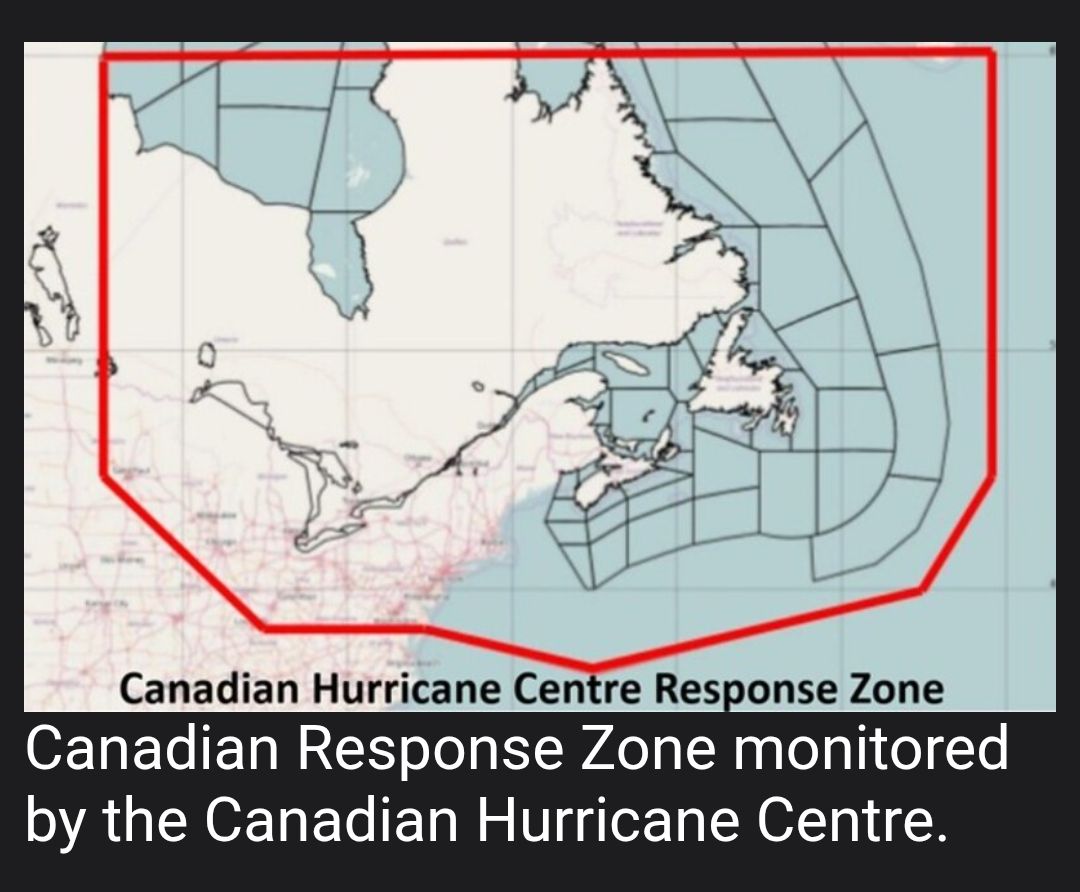
Canada monitors a defined region of the Atlantic, and when a storm is forecast to enter that zone, the Canadian Hurricane Centre issues bulletins. Historically, about 35% to 40% of Atlantic storms make it into the Canadian Response Zone.
Typically, one or two storms per season have some level of impact in Canada. Most impacts are usually minor, such as high waves, strong winds, or heavy rain, although some storms can be more significant depending on their track and intensity at landfall.
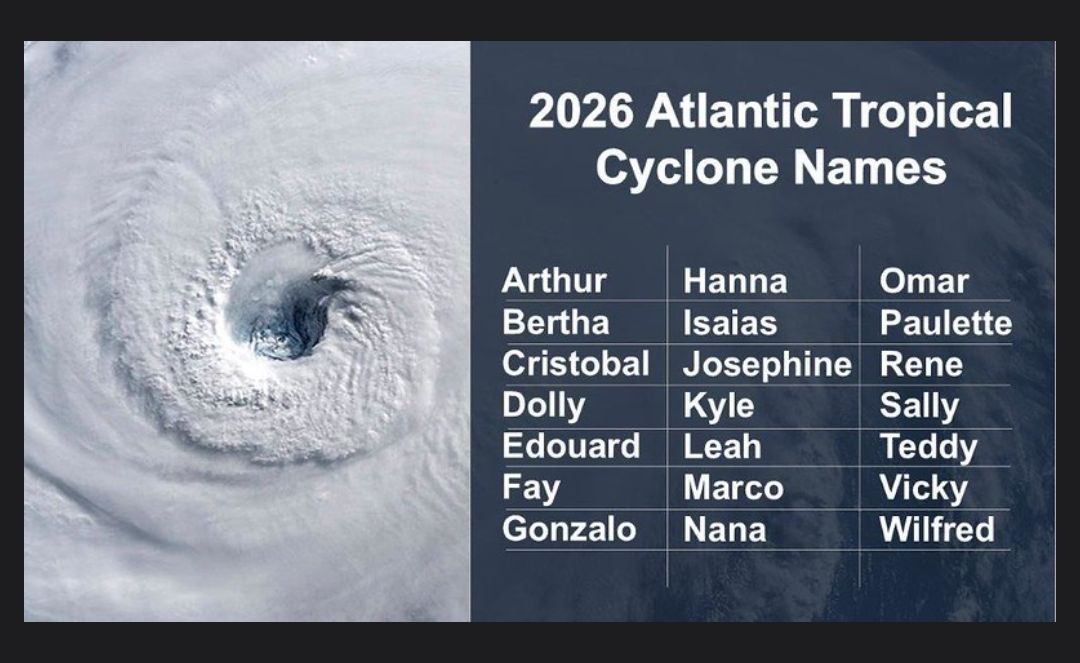
2026 list of storm names
In the Atlantic basin, storm name lists are reused every six years, meaning the 2026 list is the same set of names used during the 2020 hurricane season. However, 2020 was an exceptionally active and record-breaking year. The regular list of names was exhausted, forcing forecasters to use the Greek alphabet supplementary list. Several names, including Laura, Eta and Iota, were later retired by the World Meteorological Organization (WMO) because of the destruction they caused.
The 2026 list reflects those changes, including Leah replacing Laura:
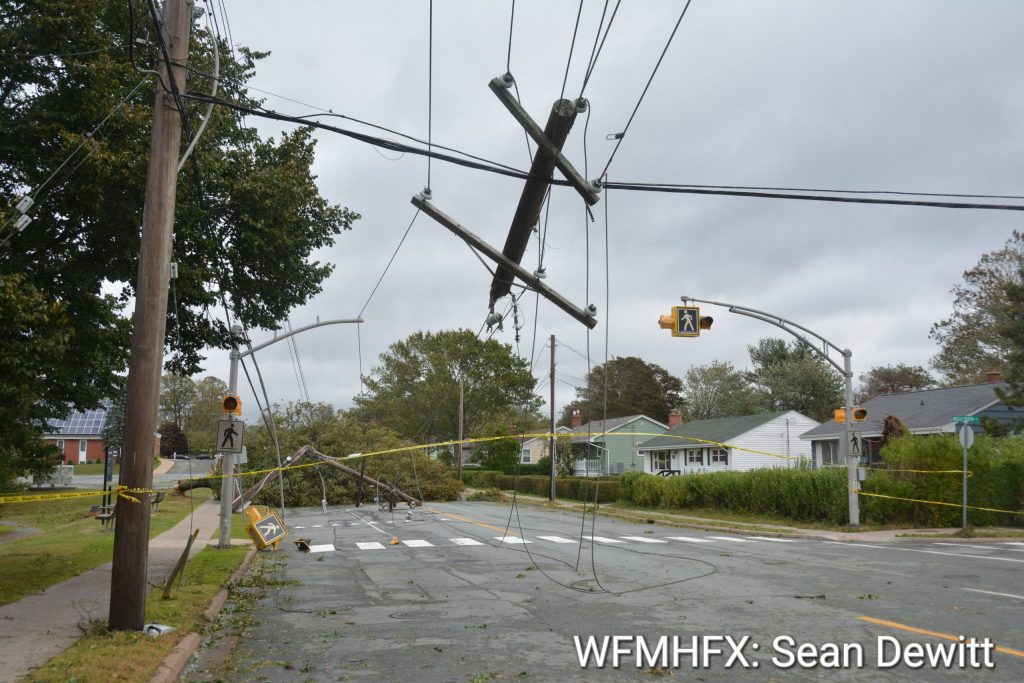
Even in a below-normal season, impactful storms can still reach Canada depending on steering currents and storm tracks. It only takes one storm to make landfall in the right place to cause significant impacts, which is why preparation is essential every year, regardless of the forecast.
Despite these competing factors, there is still uncertainty in how the season will ultimately unfold. Forecasters will continue to closely monitor and reassess oceanic and atmospheric conditions throughout the hurricane season.
What does that mean for Canada?
Canada monitors a defined region of the Atlantic, and when a storm is forecast to enter that zone, the Canadian Hurricane Centre issues bulletins. Historically, about 35% to 40% of Atlantic storms make it into the Canadian Response Zone.
Typically, one or two storms per season have some level of impact in Canada. Most impacts are usually minor, such as high waves, strong winds, or heavy rain, although some storms can be more significant depending on their track and intensity at landfall.
2026 list of storm names
In the Atlantic basin, storm name lists are reused every six years, meaning the 2026 list is the same set of names used during the 2020 hurricane season. However, 2020 was an exceptionally active and record-breaking year. The regular list of names was exhausted, forcing forecasters to use the Greek alphabet supplementary list. Several names, including Laura, Eta and Iota, were later retired by the World Meteorological Organization (WMO) because of the destruction they caused.
The 2026 list reflects those changes, including Leah replacing Laura:
Even in a below-normal season, impactful storms can still reach Canada depending on steering currents and storm tracks. It only takes one storm to make landfall in the right place to cause significant impacts, which is why preparation is essential every year, regardless of the forecast.
 As storms develop, make sure to stay informed by monitoring the latest hurricane conditions.
For more information on how to prepare for a hurricane, visit our Get prepared web page.
As storms develop, make sure to stay informed by monitoring the latest hurricane conditions.
For more information on how to prepare for a hurricane, visit our Get prepared web page.