 Fines for this offence range from $350 to $750 and, more importantly, failing to follow the law puts responders at serious risk.
Here’s what the law requires:
⚠️ When an emergency vehicle is stopped on the side of a roadway and has lights flashing, other drivers must slow down to 60 km/h or drive at the speed limit if it is lower than 60 km/h.
⚠️ On a road with two or more lanes in the same direction, drivers must also move into another lane farther away from the stopped vehicle if safe to do so.
This requirement applies to a range of emergency vehicles, including ambulances, police and fire vehicles, tow trucks when they are operating at a scene, and vehicles of other peace officers, such as conservation officers, sheriffs, and vehicle inspection officers.
Learn more about slow down, move over law in Nova Scotia: https://novascotia.ca/slowdownmoveover/
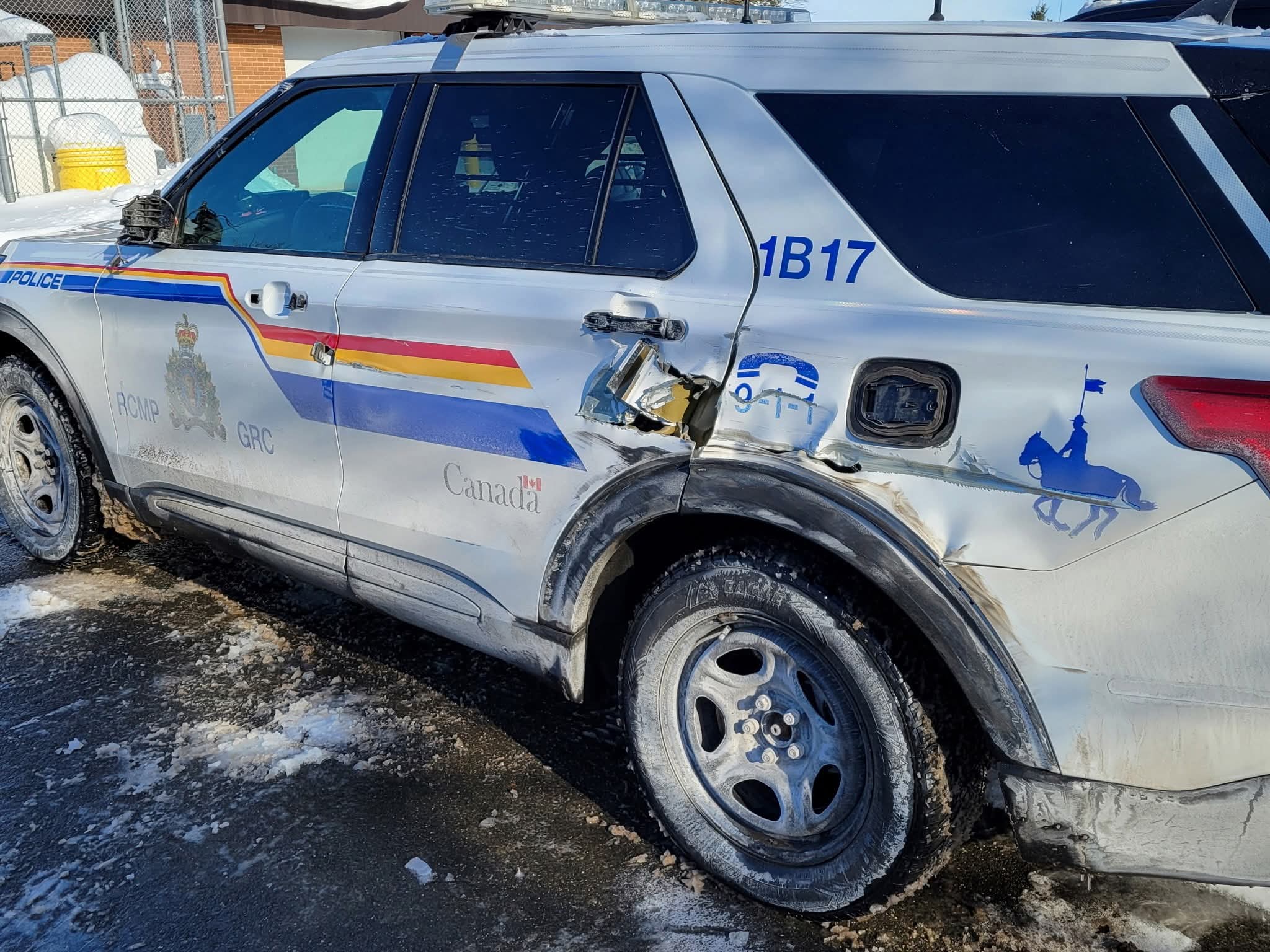
(Pictured: Cumberland County District RCMP vehicle that was struck last month on Hwy. 104.)
Fines for this offence range from $350 to $750 and, more importantly, failing to follow the law puts responders at serious risk.
Here’s what the law requires:
⚠️ When an emergency vehicle is stopped on the side of a roadway and has lights flashing, other drivers must slow down to 60 km/h or drive at the speed limit if it is lower than 60 km/h.
⚠️ On a road with two or more lanes in the same direction, drivers must also move into another lane farther away from the stopped vehicle if safe to do so.
This requirement applies to a range of emergency vehicles, including ambulances, police and fire vehicles, tow trucks when they are operating at a scene, and vehicles of other peace officers, such as conservation officers, sheriffs, and vehicle inspection officers.
Learn more about slow down, move over law in Nova Scotia: https://novascotia.ca/slowdownmoveover/
(Pictured: Cumberland County District RCMP vehicle that was struck last month on Hwy. 104.)
Traffic & Weather
Southwest Nova Traffic Services recently took part in a traffic enforcement initiative on Hwy. 101 in Kings County

**** Via RCMP
Southwest Nova Traffic Services recently took part in a traffic enforcement initiative on Hwy. 101 in Kings County
Officers issued 40 summary offence tickets, including two for violating Nova Scotia’s slow down, move over law.
Fines for this offence range from $350 to $750 and, more importantly, failing to follow the law puts responders at serious risk.
Here’s what the law requires:
⚠️ When an emergency vehicle is stopped on the side of a roadway and has lights flashing, other drivers must slow down to 60 km/h or drive at the speed limit if it is lower than 60 km/h.
⚠️ On a road with two or more lanes in the same direction, drivers must also move into another lane farther away from the stopped vehicle if safe to do so.
This requirement applies to a range of emergency vehicles, including ambulances, police and fire vehicles, tow trucks when they are operating at a scene, and vehicles of other peace officers, such as conservation officers, sheriffs, and vehicle inspection officers.
Learn more about slow down, move over law in Nova Scotia: https://novascotia.ca/slowdownmoveover/
(Pictured: Cumberland County District RCMP vehicle that was struck last month on Hwy. 104.)
Fines for this offence range from $350 to $750 and, more importantly, failing to follow the law puts responders at serious risk.
Here’s what the law requires:
⚠️ When an emergency vehicle is stopped on the side of a roadway and has lights flashing, other drivers must slow down to 60 km/h or drive at the speed limit if it is lower than 60 km/h.
⚠️ On a road with two or more lanes in the same direction, drivers must also move into another lane farther away from the stopped vehicle if safe to do so.
This requirement applies to a range of emergency vehicles, including ambulances, police and fire vehicles, tow trucks when they are operating at a scene, and vehicles of other peace officers, such as conservation officers, sheriffs, and vehicle inspection officers.
Learn more about slow down, move over law in Nova Scotia: https://novascotia.ca/slowdownmoveover/
(Pictured: Cumberland County District RCMP vehicle that was struck last month on Hwy. 104.)