 Halifax Regional Municipality no longer monitors or reports ice thickness, and conditions can change quickly — even on the same body of water. Recent snowfall adds another layer of risk, covering the ice and making it harder to see cracks, open water, or thin spots below the surface.
Some #hfxfirefighters are ice rescue technician trained, and you may see them out throughout the ice season training and practicing these critical skills. While that training is essential, prevention remains the best protection.
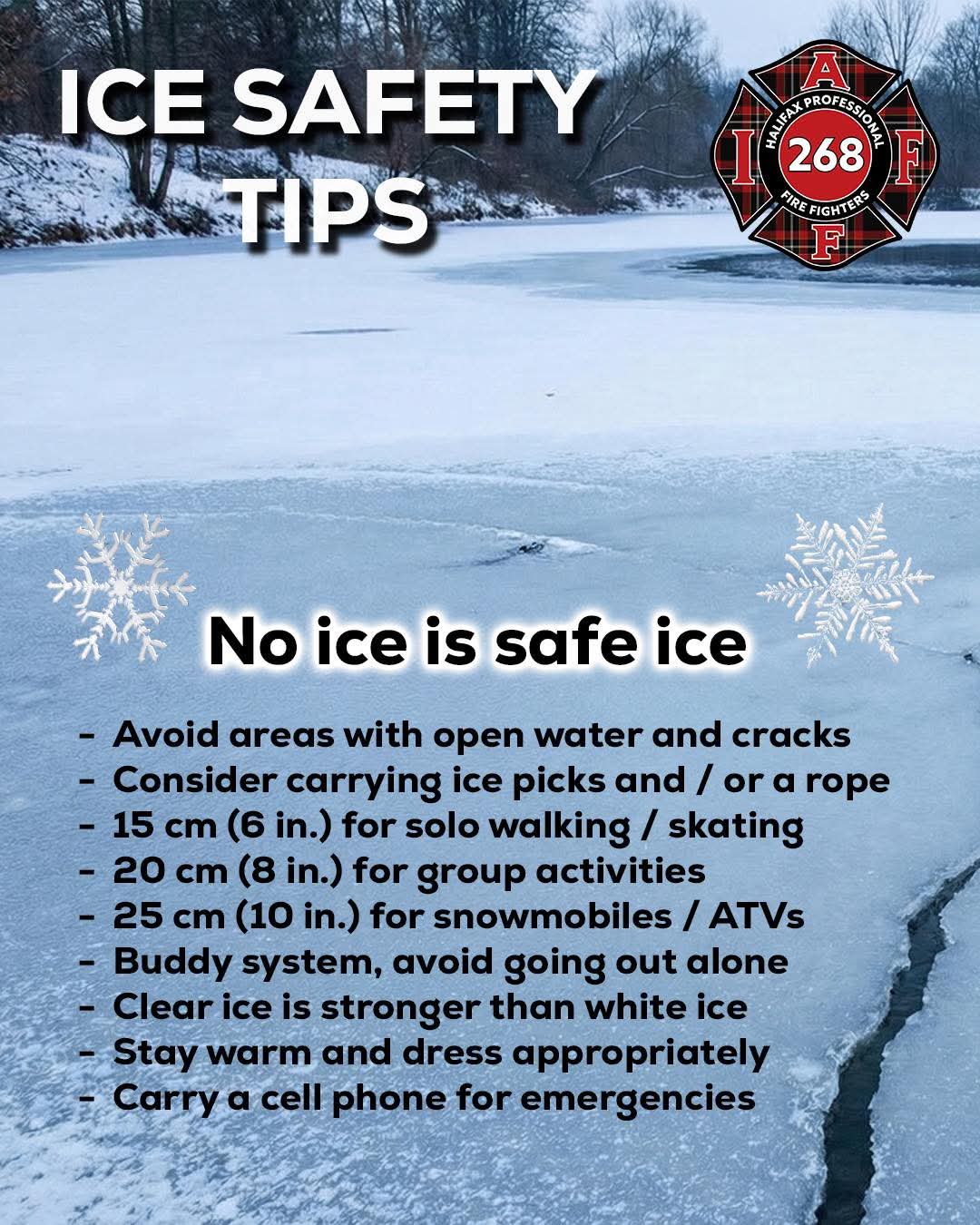
If you’re heading onto frozen lakes or ponds, use caution, follow recognized safety guidelines, go with a buddy, and be prepared for emergencies. When in doubt, stay off the ice.
Halifax Regional Municipality no longer monitors or reports ice thickness, and conditions can change quickly — even on the same body of water. Recent snowfall adds another layer of risk, covering the ice and making it harder to see cracks, open water, or thin spots below the surface.
Some #hfxfirefighters are ice rescue technician trained, and you may see them out throughout the ice season training and practicing these critical skills. While that training is essential, prevention remains the best protection.
If you’re heading onto frozen lakes or ponds, use caution, follow recognized safety guidelines, go with a buddy, and be prepared for emergencies. When in doubt, stay off the ice.
Traffic & Weather
Health And Wellness
With winter conditions settling in, a reminder that no ice is safe ice

**** Via Halifax Professional Firefighters
With winter conditions settling in, a reminder that no ice is safe ice
Halifax Regional Municipality no longer monitors or reports ice thickness, and conditions can change quickly — even on the same body of water. Recent snowfall adds another layer of risk, covering the ice and making it harder to see cracks, open water, or thin spots below the surface.
Some #hfxfirefighters are ice rescue technician trained, and you may see them out throughout the ice season training and practicing these critical skills. While that training is essential, prevention remains the best protection.
If you’re heading onto frozen lakes or ponds, use caution, follow recognized safety guidelines, go with a buddy, and be prepared for emergencies. When in doubt, stay off the ice.
Halifax Regional Municipality no longer monitors or reports ice thickness, and conditions can change quickly — even on the same body of water. Recent snowfall adds another layer of risk, covering the ice and making it harder to see cracks, open water, or thin spots below the surface.
Some #hfxfirefighters are ice rescue technician trained, and you may see them out throughout the ice season training and practicing these critical skills. While that training is essential, prevention remains the best protection.
If you’re heading onto frozen lakes or ponds, use caution, follow recognized safety guidelines, go with a buddy, and be prepared for emergencies. When in doubt, stay off the ice.