**** Via NS Government
As the weather gets warmer, it is important for people to know about and watch for blue-green algae while enjoying Nova Scotia’s freshwater shorelinesBlue-green algae
Watch for blue-green algae from May to October. Blue-green algae (also called cyanobacteria) occur naturally in surface waters like lakes, ponds, rivers and streams. The toxins in the algae can make people sick and be fatal for pets if ingested.
If you think you see blue-green algae, don’t touch it, swim or play in it, or drink the water.
Reporting blue-green algae
If you think you see blue-green algae, you should treat it as potentially toxic. Report it to your local Department of Environment and Climate Change office or call 1-877-936-8476.Where to find blue-green algae reports
The Department of Environment and Climate Change publishes a list of potential blue-green algae blooms online and shares new reports on social media. In the case of public drinking water supplies, an inspector will visually confirm the presence of blue-green algae and work directly with the water supply owner. Supervised beaches in Halifax Regional Municipality monitor for blue-green algae and publish advisories online. The Nova Scotia Lifeguard Service shares notices about water quality and beach closures on social media. You can also look for signs posted near provincial beaches.Identifying blue-green algae
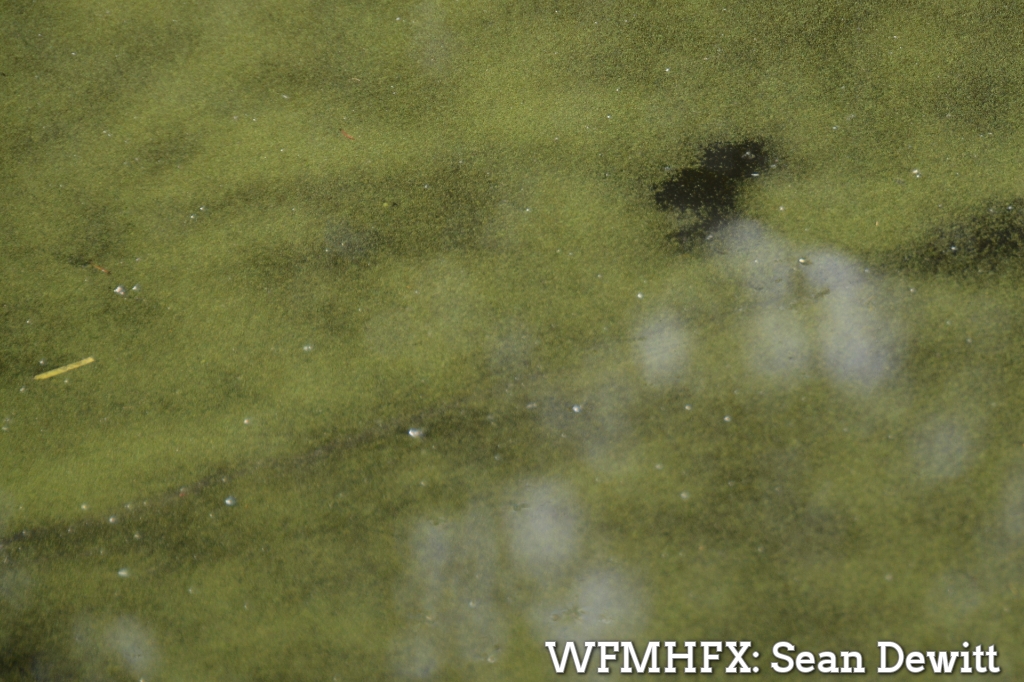
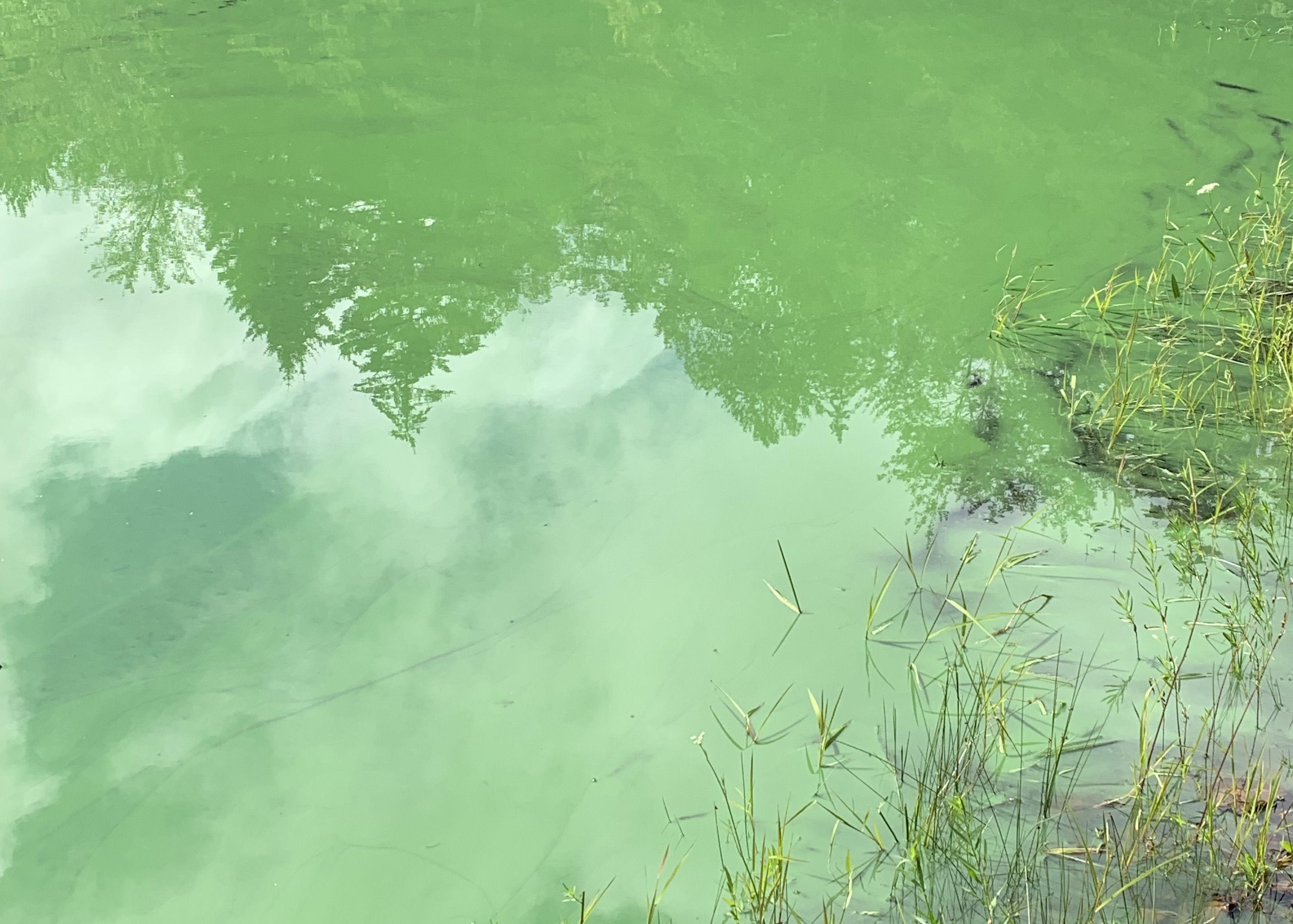
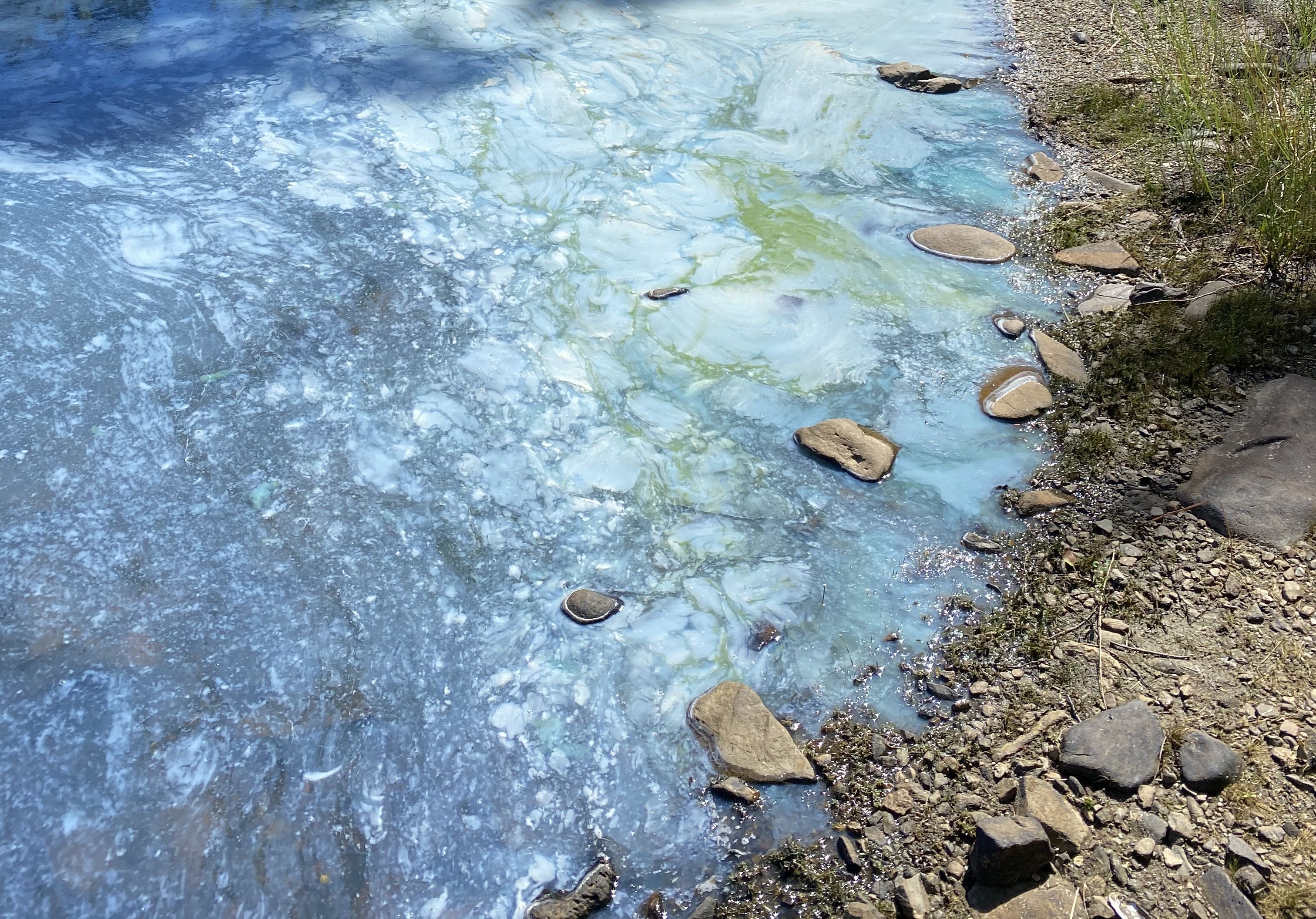
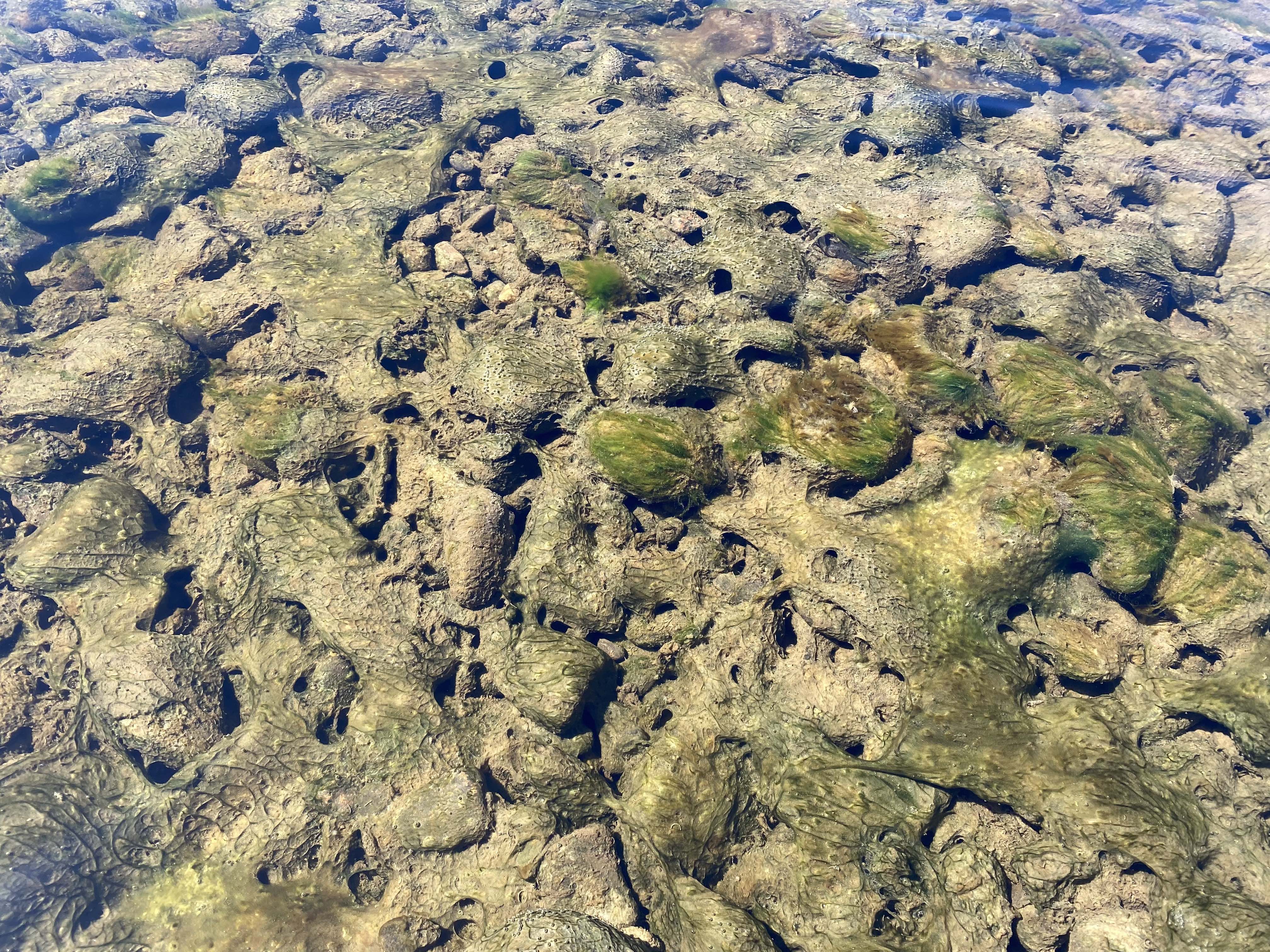
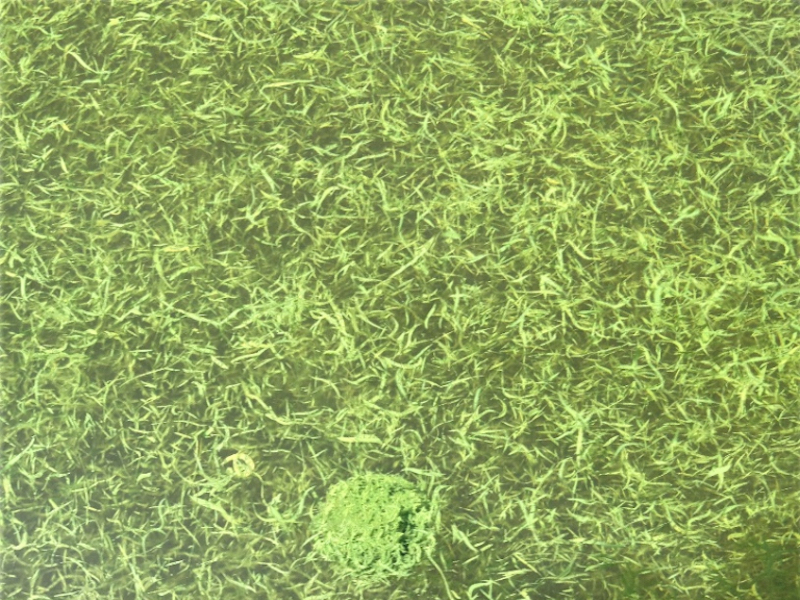
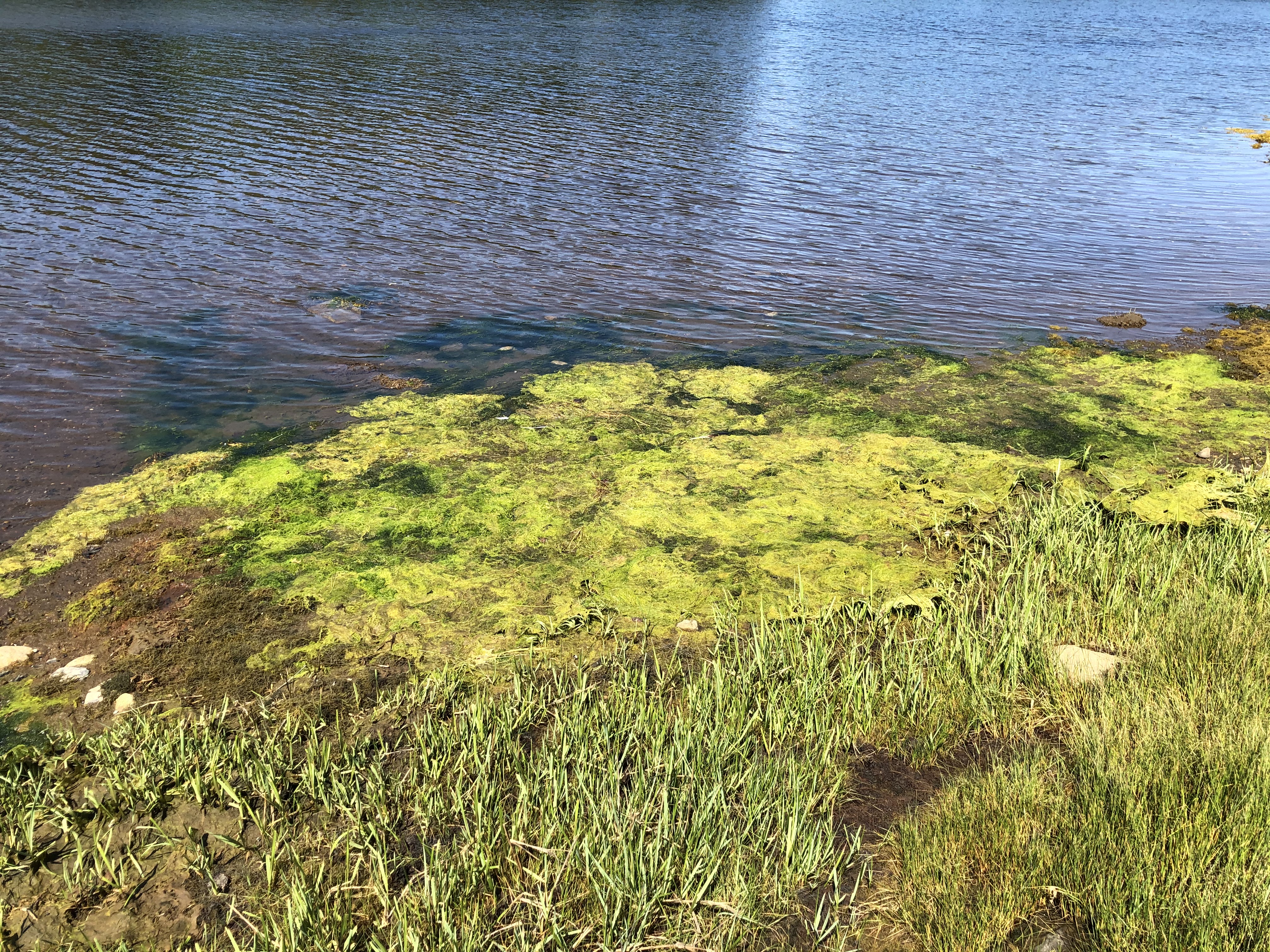
Despite the name, blue-green algae can be turquoise, green, brown, red, white or mixes of these colours. Blue-green algae blooms can look like fine grass clippings in the water, spilled paint or pea soup. Sometimes they look like a thick scum on the surface. They often smell musty or grassy when healthy and like ammonia when decomposing. There may also be algae mats at the bottom of clear shallow areas of lakes and rivers or on the shoreline. The algae mats look like clumps of vegetation and can appear black, brown or dark green in the water. On the shoreline, they may appear brown or grey once they have dried. Animals are attracted to their odour and may try to eat them. Keep children and pets away from algae mats.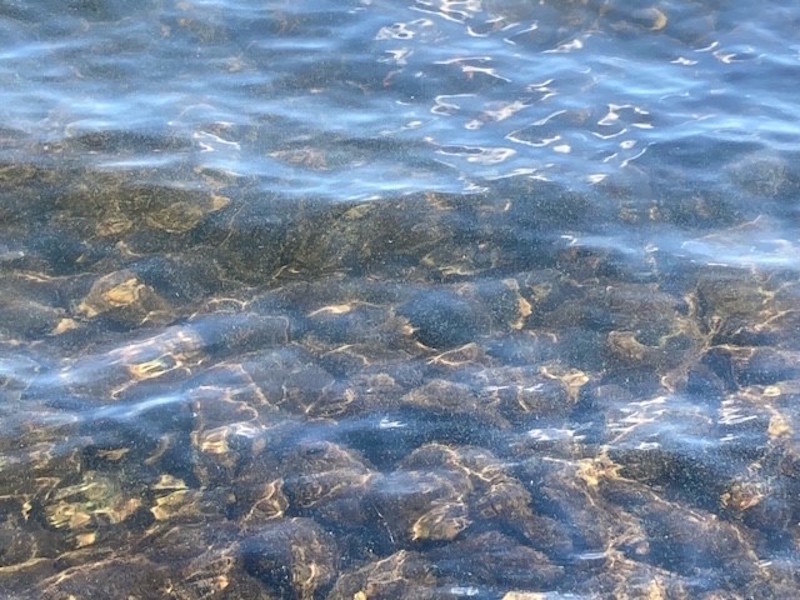 A low-density bloom of blue-green algae species in Nova Scotia, near the shoreline of a lake. (Photo: Department of Environment and Climate Change)
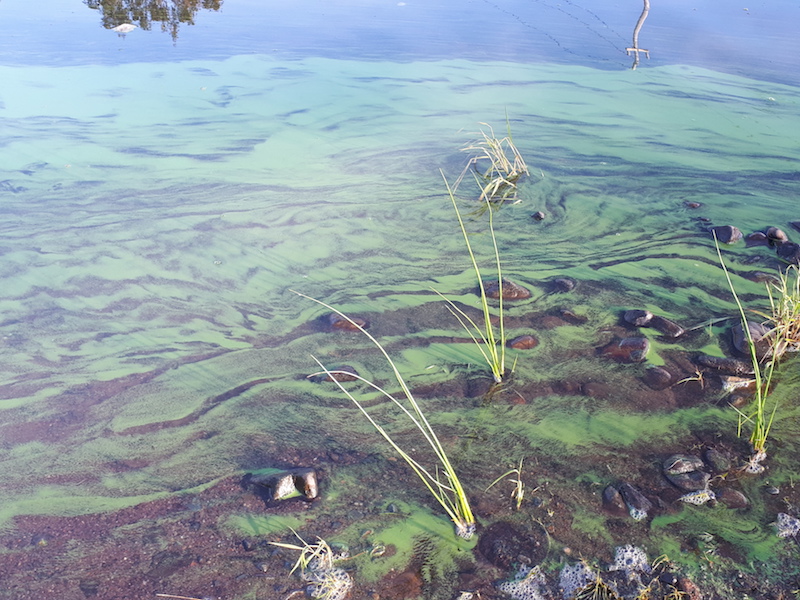 A medium-density bloom of blue-green algae species in Nova Scotia, near the shoreline of a lake. (Photo: Department of Environment and Climate Change)
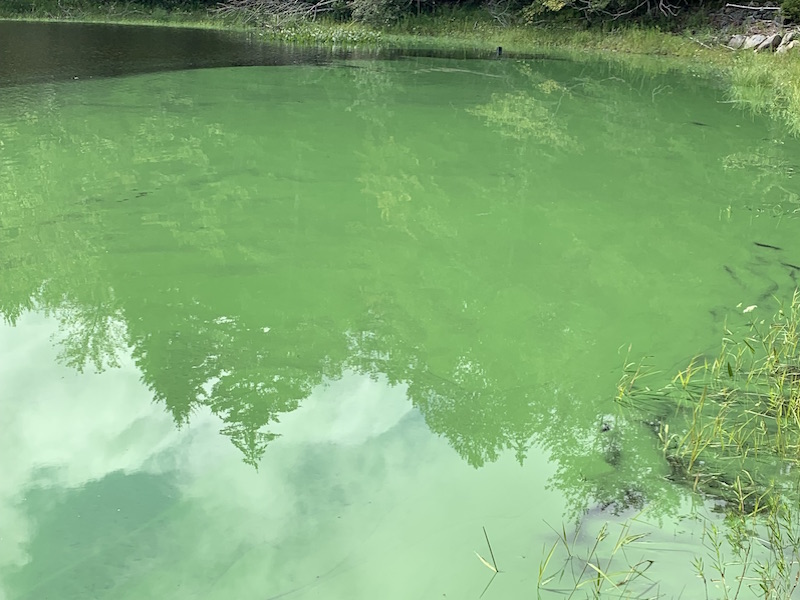 A blue-green algae bloom resembling spilled paint near the shoreline of a lake. (Photo: Jean Cleveland)
 A decaying bloom with blue-green colour visible on the shoreline of a lake. (Photo: Jean Cleveland)
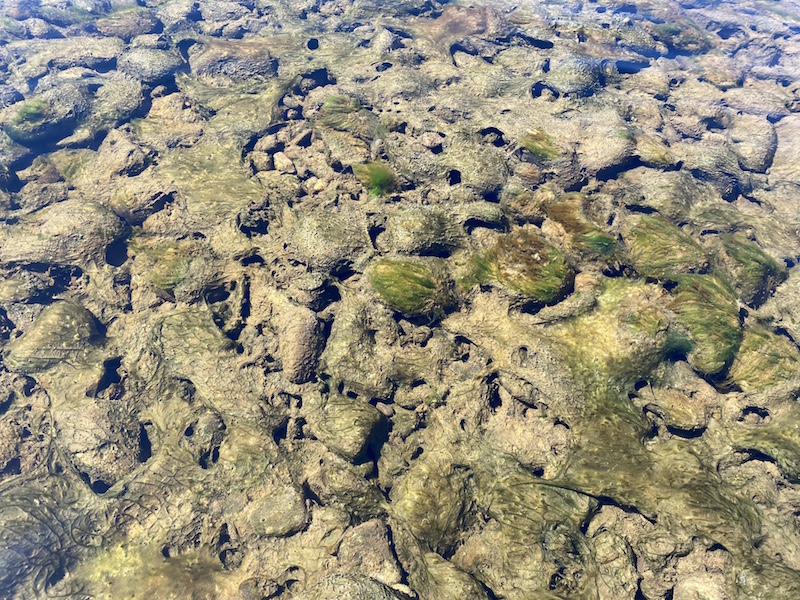 A blue-green algae mat attached to the bottom of a river. (Photo: Meghann Bruce)
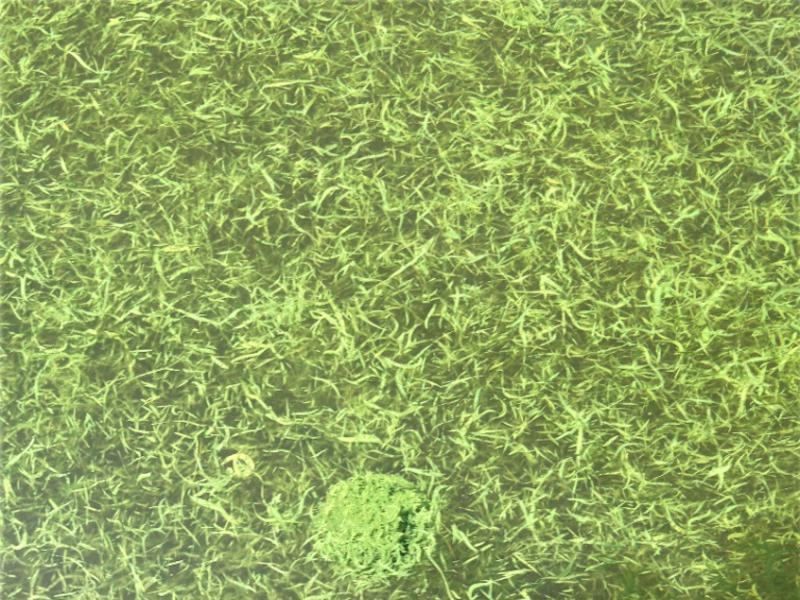 A blue-green algae bloom resembling grass clippings. (Photo: Jacob Kann)
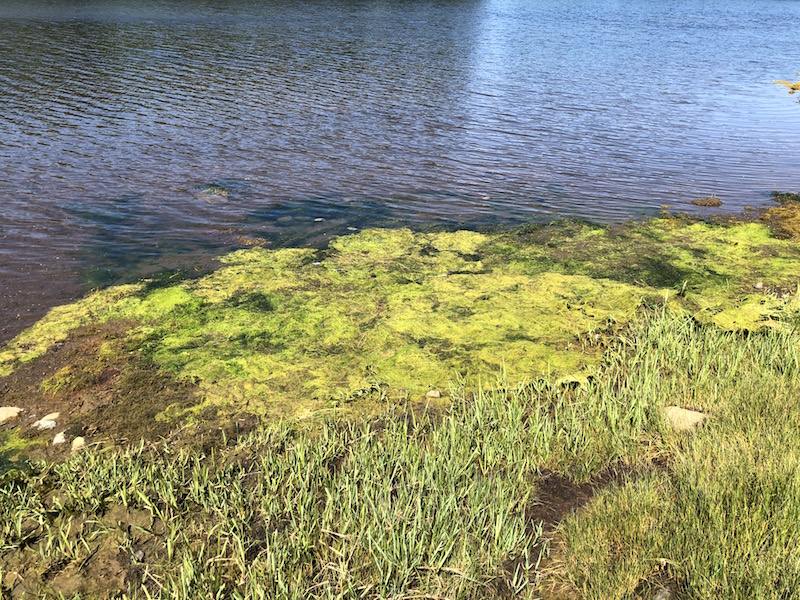 A blue-green algae mat in salt water. Blue-green algae is less common in marine environments. (Photo: Kelly Maher)

Blue-green algae reported in 2023
Last updated:
| Lake | County | Month |
|---|---|---|
| Ainslie | Inverness | July |
| Morris Lake (Kiwanis Beach, 759 Caldwell Road, Dartmouth) | Halifax | July |
| Lochaber Lake, Lochaber | Antigonish | July |
| Scotts Lake (near Hassett) | Digby | July |
| Ameros Lake (near Danvers) | Digby | July |
| Mattatall Lake | Cumberland | July |
| Fox Point Lake | Lunenburg | July |
| Indian Harbor Lake | Guysborough | July |
| Long Lake, Hammonds Plains (between Lakefront Dr and Long Lake Dr, Kingswood subdivision) | Halifax | July |
| Loon Lake | Halifax | June |
| Lake Ogden | Yarmouth | June |
| Lake Fanning | Yarmouth | June |
| Lake Martha | Hants | June |
| Three Mile Lake | Halifax | June |
| Kinsac Lake | Halifax | June |
| Second Lake | Halifax | June |
| First Lake | Halifax | June |
| Molega Lake | Queens | June |
| Aylesford Lake | Kings | June |
| Shubenacadie Grand Lake | Halifax | June |
| Wrights Lake | Halifax | June |
| Covey Lake | Lunenburg | June |
| Lake Torment | Kings | June |
| Armstrong Lake | Kings | June |
| Oathill Lake | Halifax | June |
Health effects
In people, blue-green algae exposure when swimming can cause itchy, irritated eyes and skin. Swallowing or inhaling the water can cause headaches, fever, diarrhea, abdominal pain, nausea and vomiting. Prolonged exposure can damage the liver. Children are at greater risk because of their lower body weight. They also tend spend more time in water and are more likely to swallow it. In pets, exposure to blue-green algae can be fatal.Safety
If blue-green algae is present:- don’t drink, swim, bathe, shower or brush your teeth with the water
- don’t allow children, pets or livestock to drink or swim in the water
- if you come in contact with blue-green algae, wash yourself and any items that came in contact
- use alternative water sources for drinking, cooking, bathing, laundry and watering vegetables (contaminated water isn’t safe even if it’s boiled, filtered in a jug or pitcher or treated with bleach, herbicides, copper sulfate or other algicides)
- be careful with recreational water activities that generate spray (like boating) because the toxins can be inhaled
- be careful when eating fish caught in water where blue-green algae blooms occur (do not eat the liver, kidneys or other organs because the toxins can be stored there)
- if you get s